

Precision isn’t just a metric; it’s the foundation of data integrity. In the lab, a failed experiment often starts with a measurement error invisible to the naked eye. Selecting the right laboratory balance requires more than comparing prices—it’s about matching sensor technology to your required accuracy to ensure repeatable, audit-ready results.
I. Understanding Common Laboratory Balance Types
Choosing the right tool requires matching the instrument’s capabilities to your specific application. While many specialized types exist, Analytical and Precision balances are the essential workhorses of the modern laboratory.
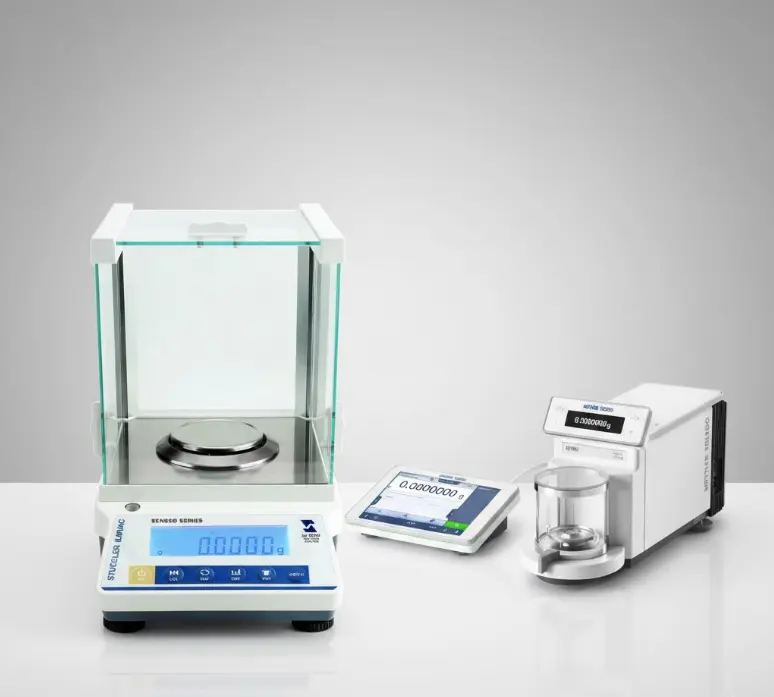
- Analytical Balances: Built for extreme sensitivity, these measure in the sub-milligram range (readability of 0.1 mg to 0.001 mg). They feature transparent draft shields to prevent air currents from destabilizing the measurement.
- Precision and Top-Loading Balances: These are the “powerhouses” of the lab, offering higher capacities (up to 10 kg+) with readability from 1 g to 0.001 g. They prioritize speed and durability for bulk weighing and general tasks.
- Microbalances and Ultra-Microbalances: These represent the pinnacle of sensitivity, measuring mass down to the microgram range (0.1 µg to 1 µg). They are indispensable for analyzing minute particulate matter.
- MoiSpecialized Balances: This category includes semi-micro balances (0.01 mg readability), mechanical or triple-beam balances, and intrinsically safe balances certified for use in hazardous, flammable environments.sture Analyzers: A hybrid instrument that functions as a balance with a built-in heating element. It weighs a sample before and after heating to calculate moisture content based on weight loss.
II. Decoding Key Technical Specifications
To avoid the “Accuracy vs. Readability” trap, you must understand the hardware driving the numbers on the screen.
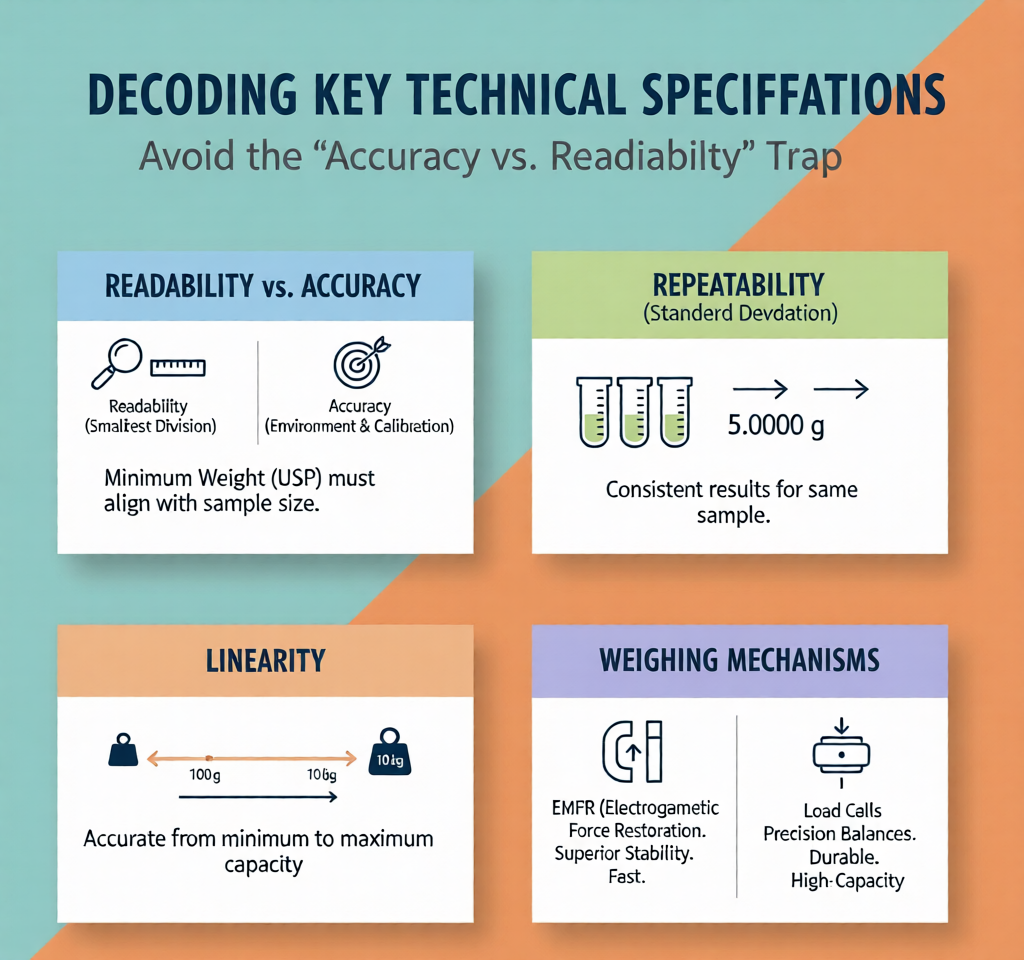
- Readability vs. Accuracy: Readability is the smallest division displayed. However, Accuracy depends on the environment and calibration. Always look for a balance where the Minimum Weight (per USP standards) aligns with your smallest sample size.
- Repeatability (Standard Deviation): The most critical spec. It measures the balance’s ability to display the same result for the same sample under identical conditions.
- Linearity: Ensures the balance is as accurate at its maximum capacity as it is at its minimum.
- Weighing Mechanisms:
- Electromagnetic Force Restoration (EMFR): Found in high-end Analytical balances for superior stability and faster settling times.
- Load Cells: Found in robust Precision balances; they offer excellent durability and cost-effectiveness for higher-capacity weighing.
III. A 5-Step Selection Checklist
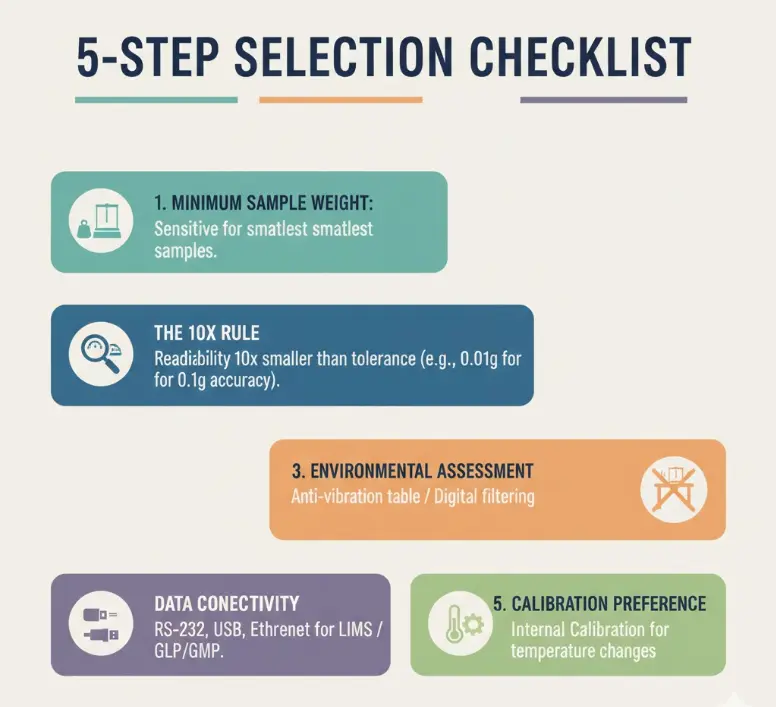
- Define Your Minimum Sample Weight: Don’t just look at the max capacity. Ensure the balance is sensitive enough to accurately weigh your smallest samples without falling below the “Minimum Weight” threshold.
- The 10x Rule: To ensure true accuracy, choose a laboratory balance with a readability at least 10 times smaller than your required tolerance (e.g., if you need accuracy to 0.1g, use a 0.01g balance).
- Environmental Assessment: High-precision instruments are sensitive to vibrations and static. Do you have a dedicated anti-vibration table? If not, look for balances with advanced digital filtering.
- Data Connectivity: Does your lab require GLP/GMP compliance? Look for RS-232, USB, or Ethernet ports for seamless LIMS integration.
- Calibration Preference: Choose Internal Calibration if your lab undergoes frequent temperature changes; it allows the balance to self-correct automatically.
IV. Setup and Maintenance Best Practices
A high-quality balance is only as effective as its environment.
- Eliminate Drift: Place the balance away from HVAC vents and windows. Even a slight temperature shift can cause the display to “creep.”
- Static Control: In dry environments, static electricity can cause erratic readings. Use ionizing pens or ensure your balance has a grounded weighing pan.
- Leveling: Always check the built-in bubble level. An unlevel balance introduces “off-center loading errors” that skew data.
- Daily Verification: Perform a “check-weight” test at the start of every shift using a certified Class E2 or F1 calibration weight.
Conclusion
Choosing the right balance is a strategic investment in lab efficiency and data reliability. Precision is the foundation of every scientific breakthrough. Whether you need the extreme sensitivity of an Analytical Balance or the high-capacity versatility of a Precision and Top-Loading Balance, Stuccler provides the high-performance tools your research demands.
Don’t compromise your data—visit Stuccler today to find the ideal laboratory balance for your workflow.
Want to know how to choose? After understanding the principles, click to view the practical selection guide: How to Choose the Right Laboratory Balance for Your Needs