

In precision manufacturing, your balance is your truth. Whether grading diamonds, mixing dental resins, or counting industrial parts, a tiny error costs a fortune. This guide cuts through the marketing fluff to reveal the hardware reality. We examine six dimensions to ensure your investment stands the test of time.
I. Capacity and Readability
This is the initial step. It determines task fit.
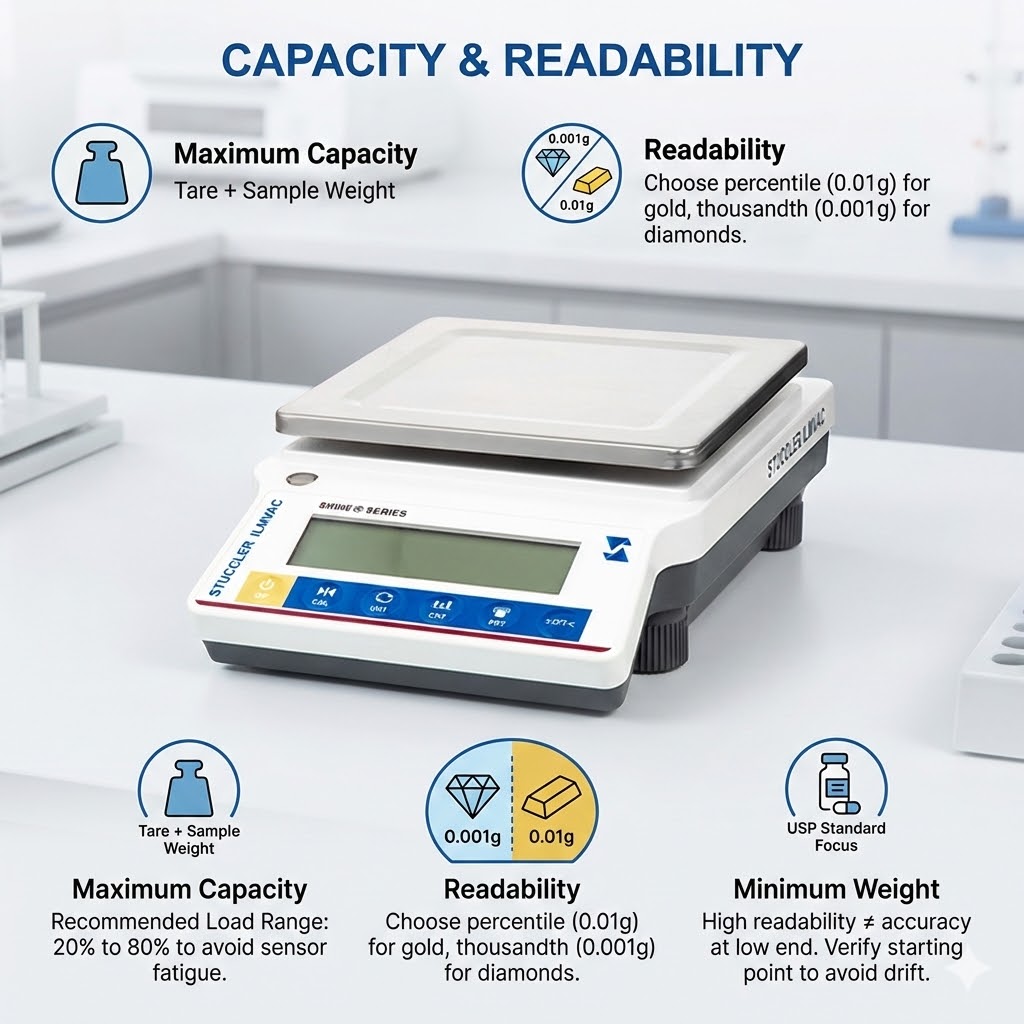
- Maximum Capacity: Calculate the “tare weight + sample weight.” Never max out your scale. We recommend a 20% to 80% load range. This avoids sensor fatigue. It ensures long-term health. It prevents permanent deformation.
- Readability: Know your limits. There is a huge gap between 0.01g (percentile) and 0.001g (thousandth). A scale for gold might need 0.01g. Diamond grading requires 0.001g. Choose for your specific material.
- Minimum Weight Don’t just count decimals. For pharma or precious metals, focus on the USP standard minimum weight. High readability does not mean accuracy at the low end. Verify the starting point. Avoid measurement drift.
II. Sensor Technology and Stability
The sensor is the heart. It dictates data reliability.
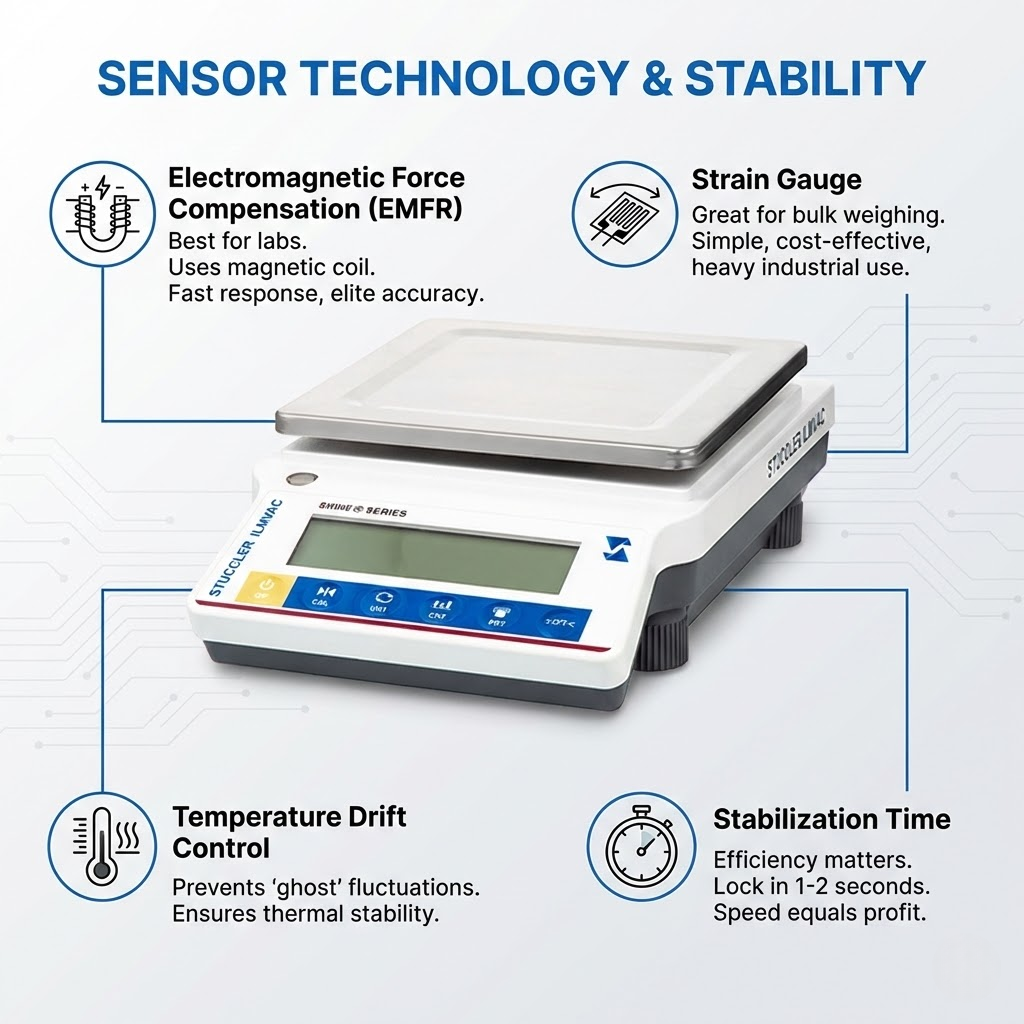
- Electromagnetic Force Compensation (EMFR): Best for labs. It uses a magnetic coil to counteract the weight. It offers fast response. It provides elite, repeatable accuracy.
- Strain Gauge: Great for bulk weighing. It uses a metal foil that deforms under load. It is simple. It is cost-effective. It fits heavy industrial use.
- Temperature Drift Control: Heat changes readings. High-quality sensors offer thermal stability. This stops “ghost” fluctuations in unheated warehouses. It keeps data steady.
- Stabilization Time: Efficiency matters. In high-speed production, you need a lock in 1-2 seconds. Waiting 5 seconds kills productivity. Every second counts. Speed equals profit.
III. Build Quality and Durability
Professionalism is seen in the build.
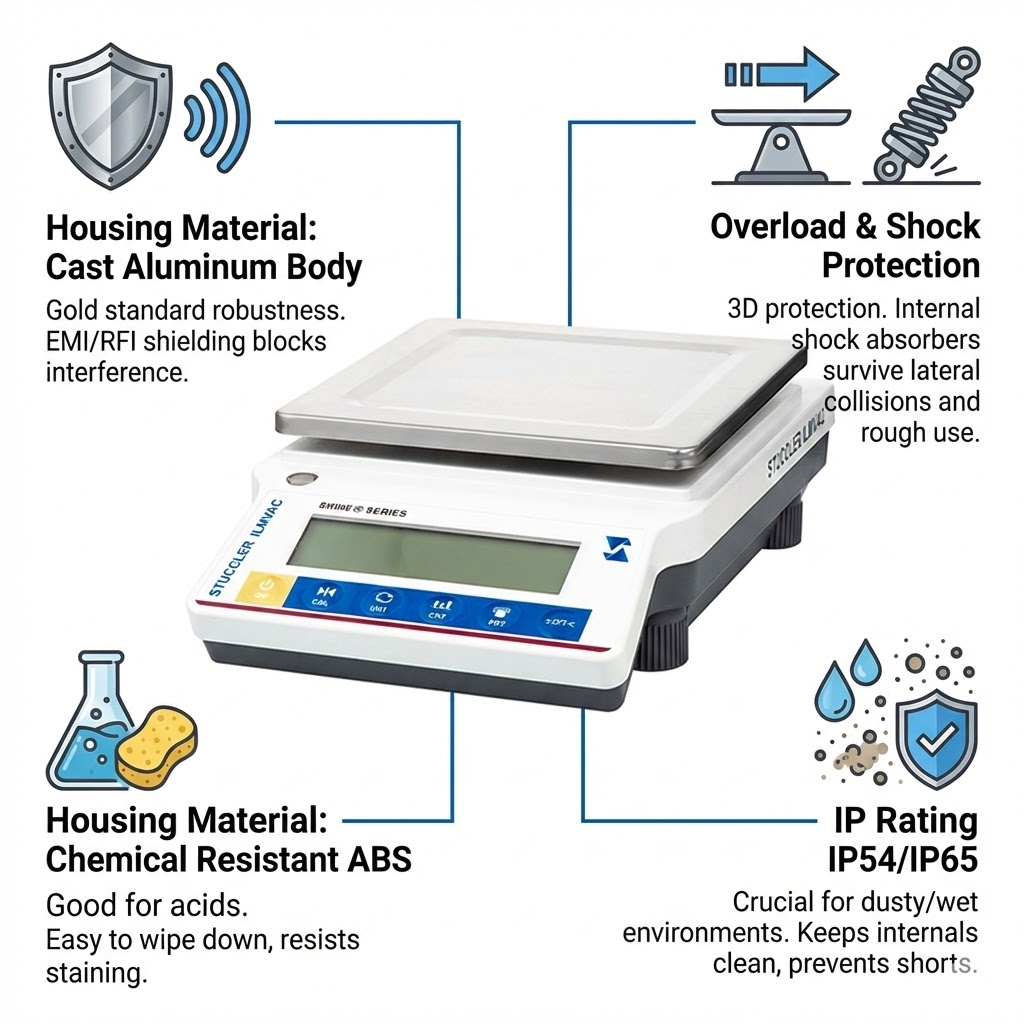
- Housing Material
- Cast Aluminum Body: This is the gold standard. It provides robustness. It offers EMI/RFI shielding. It blocks interference from phones and motors. It stays stable.
- Chemical Resistant ABS: Good for acids. Use this if accuracy is moderate. It is easy to wipe down. It resists staining.
- Overload and Shock Protection: Look for 3D protection. Lateral collisions happen often. A worker bumps the side; the sensor breaks. Good balances have internal shock absorbers. They survive accidents. They handle rough use.
- IP Rating: Check the environment. Do you have dust? Is there water? An IP54 or IP65 rating is crucial for dental labs and tool shops. It keeps internals clean. It prevents shorts.
IV. Pan Size and Geometric Design
Pan design affects stability.
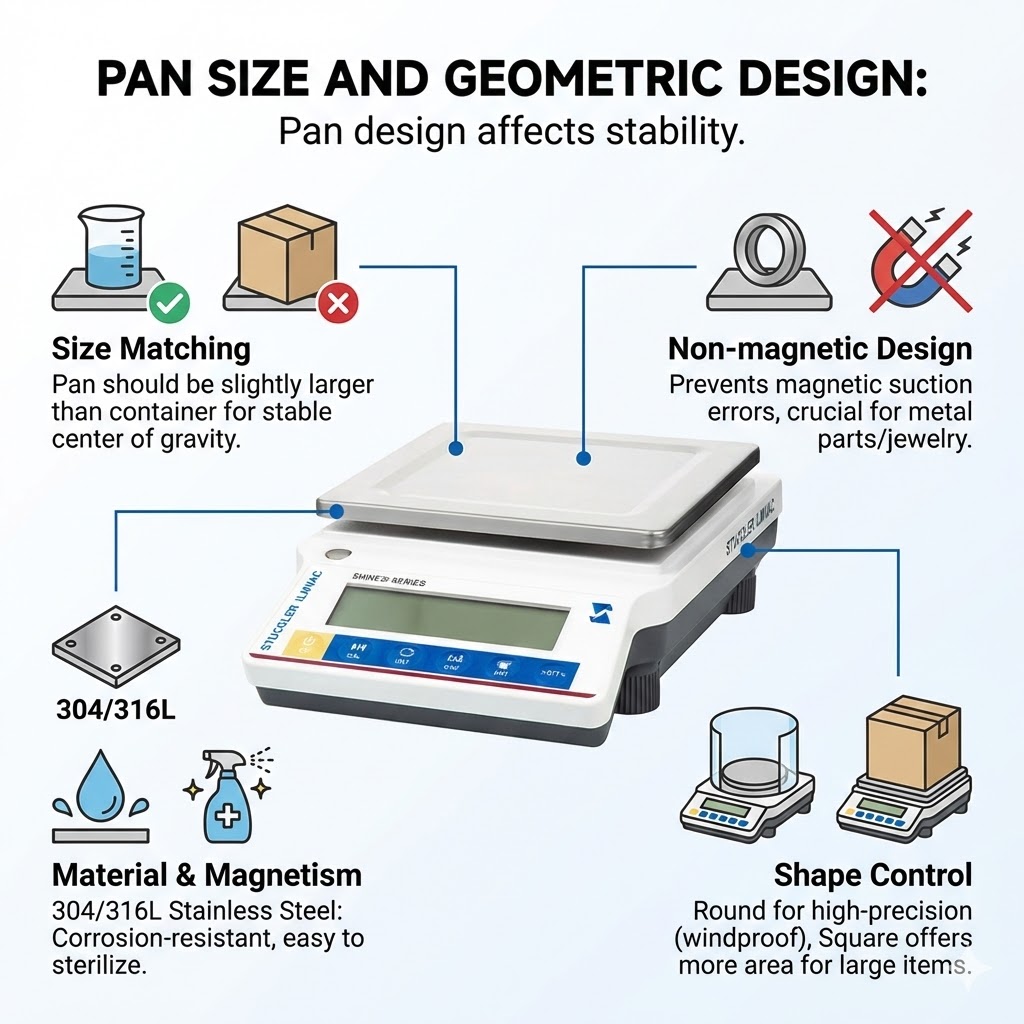
- Size Matching: The pan should be slightly larger than your container. This ensures a stable center of gravity. It avoids “airflow dead zones” at edges. Small pans cause drift.
- Material & Magnetism: Use 304/316L Stainless Steel. It is corrosion-resistant. It is easy to sterilize. It looks professional.
- Non-magnetic Design: Crucial for metal parts. It prevents magnetic suction errors. This is vital for jewelry. It ensures true weight.
- Shape Control: Round pans often include windproof covers. These are for high-precision work. Square pans offer more area. They are better for large boxes.
V. Calibration and Environment
Consistency is key.
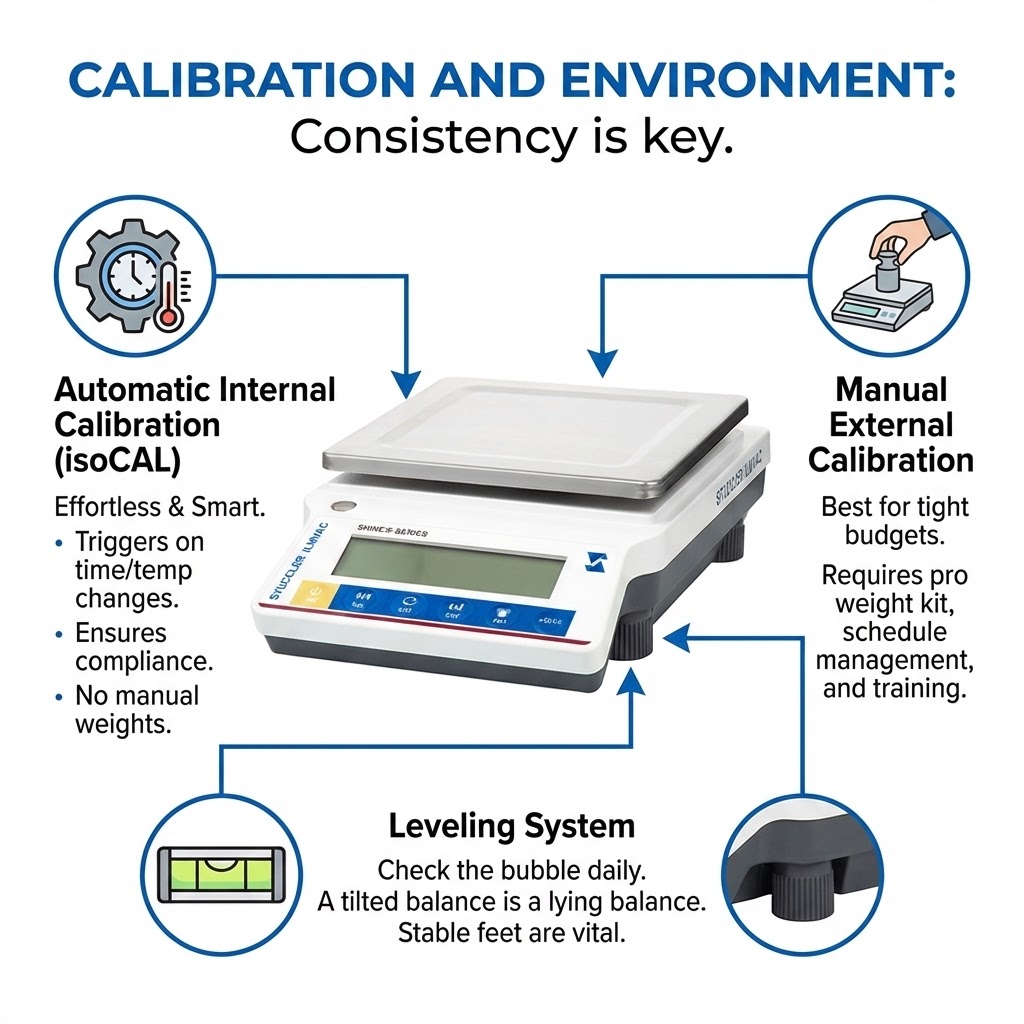
- Automatic Internal Calibration: We recommend isoCAL. It triggers based on time or temperature changes. It ensures compliance. No manual weights needed. It is effortless. It is smart.
- Manual External Calibration: Best for tight budgets. You must have a pro weight kit. You must manage the schedule. It requires training.
- Leveling System: Check the bubble. Is it visible? Are the feet durable? A tilted balance is a lying balance. Level it daily. Stable feet are vital.
VI. Connectivity and Compliance
Data must move fast.
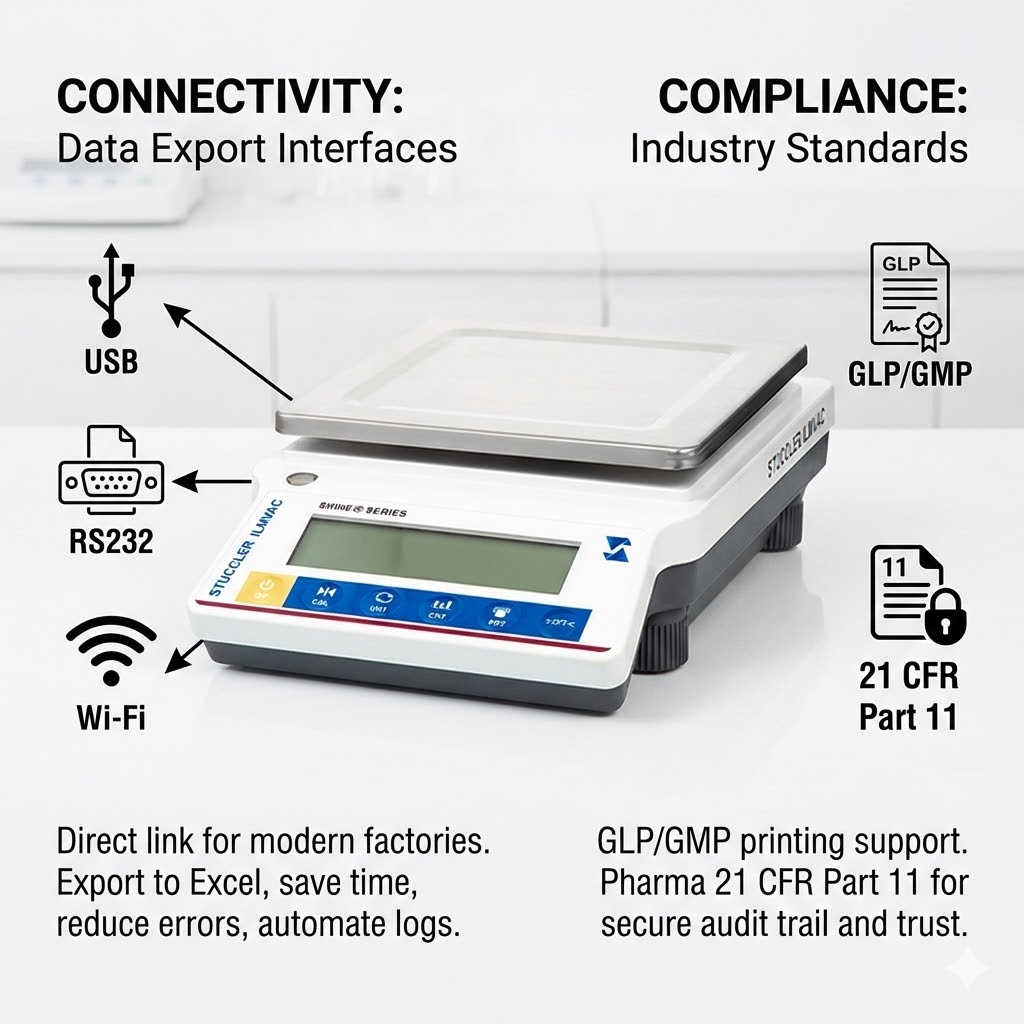
- Data Export Interfaces: Look for USB, RS232, or Wi-Fi. In modern factories, you need a direct link. Exporting to Excel saves time. It reduces typing errors. It automates logs.
- Industry Compliance: Ensure support for GLP/GMP printing. For pharma, 21 CFR Part 11 is a must. It provides the audit trail you need. It ensures trust.
Conclusion
To choose correctly, start with your minimum sample size. Next, evaluate the work quality grade of the housing. Finally, find the balance between these features and your price. Quality pays for itself. It reduces downtime.When you are ready to upgrade your precision, explore our full range of professional tools. Visit the Stuccler website to find the perfect Top Loading Balance for your specific industry needs today.