

In the precious metals trade, a 0.01g error causes instant profit loss. Mastering your precision balance is an absolute requirement. Whether you are a novice artisan or an experienced gold buyer, this skill matters. This guide covers environmental setup, operating procedures, calibration techniques, and troubleshooting.
I. Preparation Before Weighing: Environment and Setup
Your workspace directly impacts your scale’s accuracy.
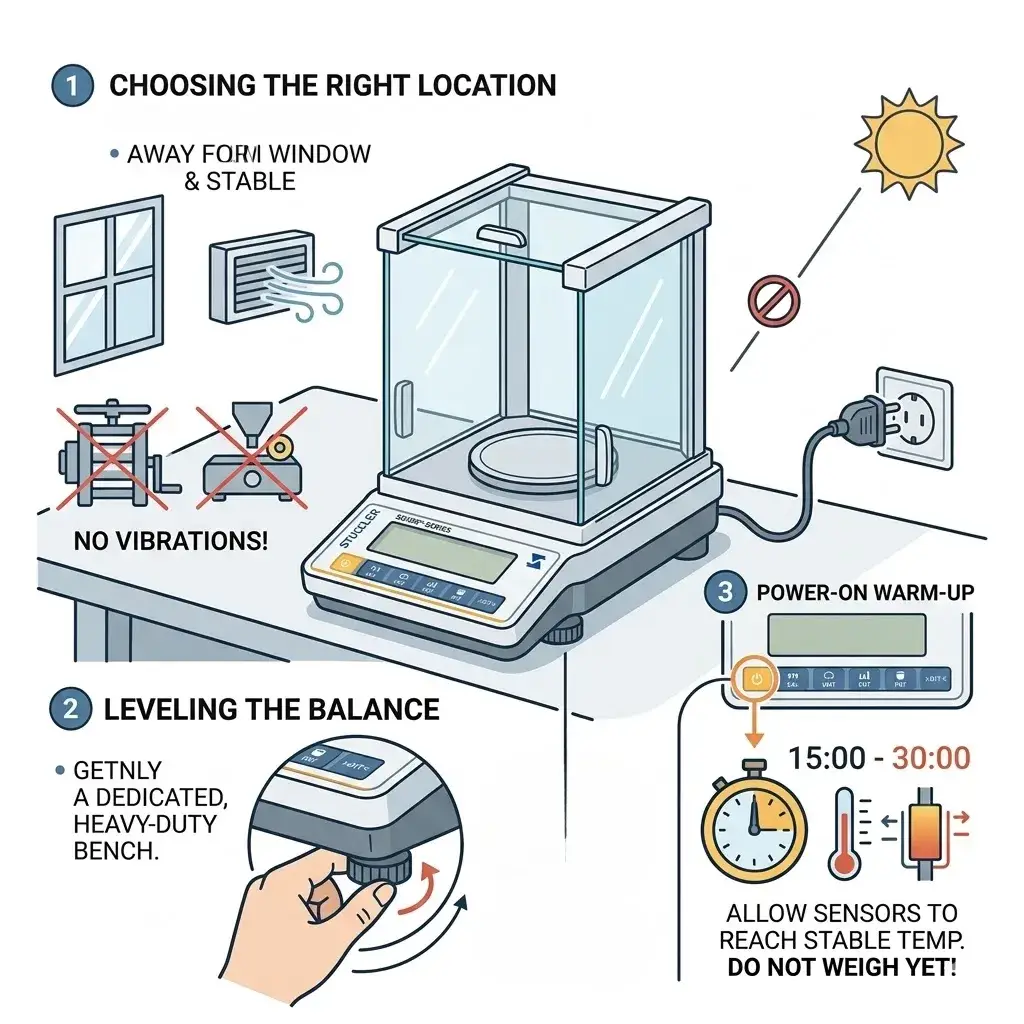
1. Choosing the Right Location
Location matters. Keep your balance away from air vents, windows, and direct sunlight. Drafts from fans easily disrupt sensitive sensors. Vibration control is absolutely critical for precision weighing. You must never place the scale on a shared workbench. Micro-motors, rolling mills, and polishing machines create severe resonance.
2. Leveling the Balance
Adjust the leveling feet at the base of the unit. Watch the spirit level closely. The bubble must be perfectly centered within the circle. Take your time with this adjustment. This is the critical first step for guaranteeing accuracy.
3. Power-On Warm-up
High-precision balances require a strict warm-up period. Do not use the scale immediately. Wait 15 to 30 minutes after powering on. Internal sensors must reach a stable operating temperature. Skipping this warm-up phase leads to inaccurate results.
II. Standard Operating Procedures
Follow these steps exactly for reliable measurements.
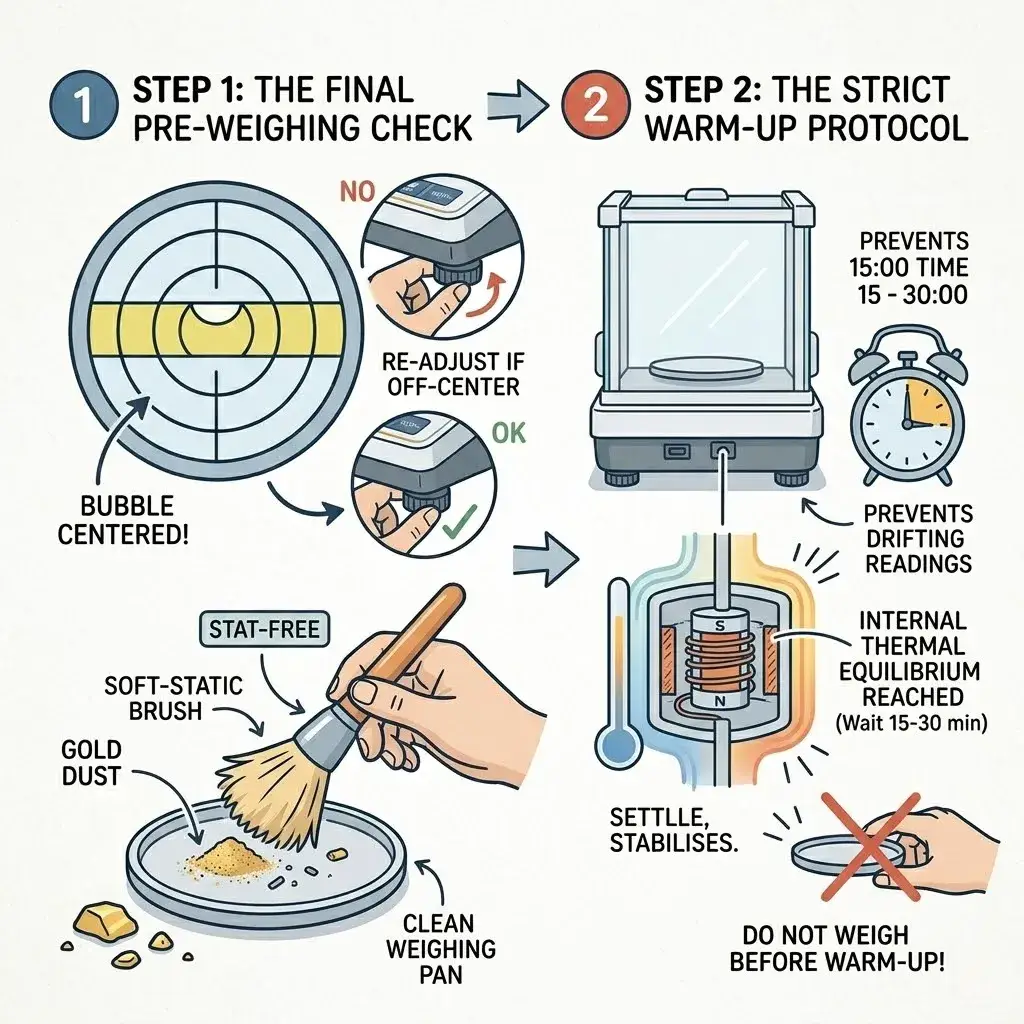
Step 1: The Final Pre-Weighing Check
Check the spirit level one last time. The bubble must sit entirely within the central circle. Do not proceed if it is off-center; readjust the feet instead. Clean the weighing pan carefully. Use a soft, anti-static brush. Sweep away all gold dust and debris from previous transactions.
Step 2: The Strict Warm-up Protocol
Electromagnetic force sensors are incredibly sensitive to temperature changes. You must wait the full 15 to 30 minutes. The internal electronic components need thermal equilibrium. This crucial step prevents readings from continuously drifting.
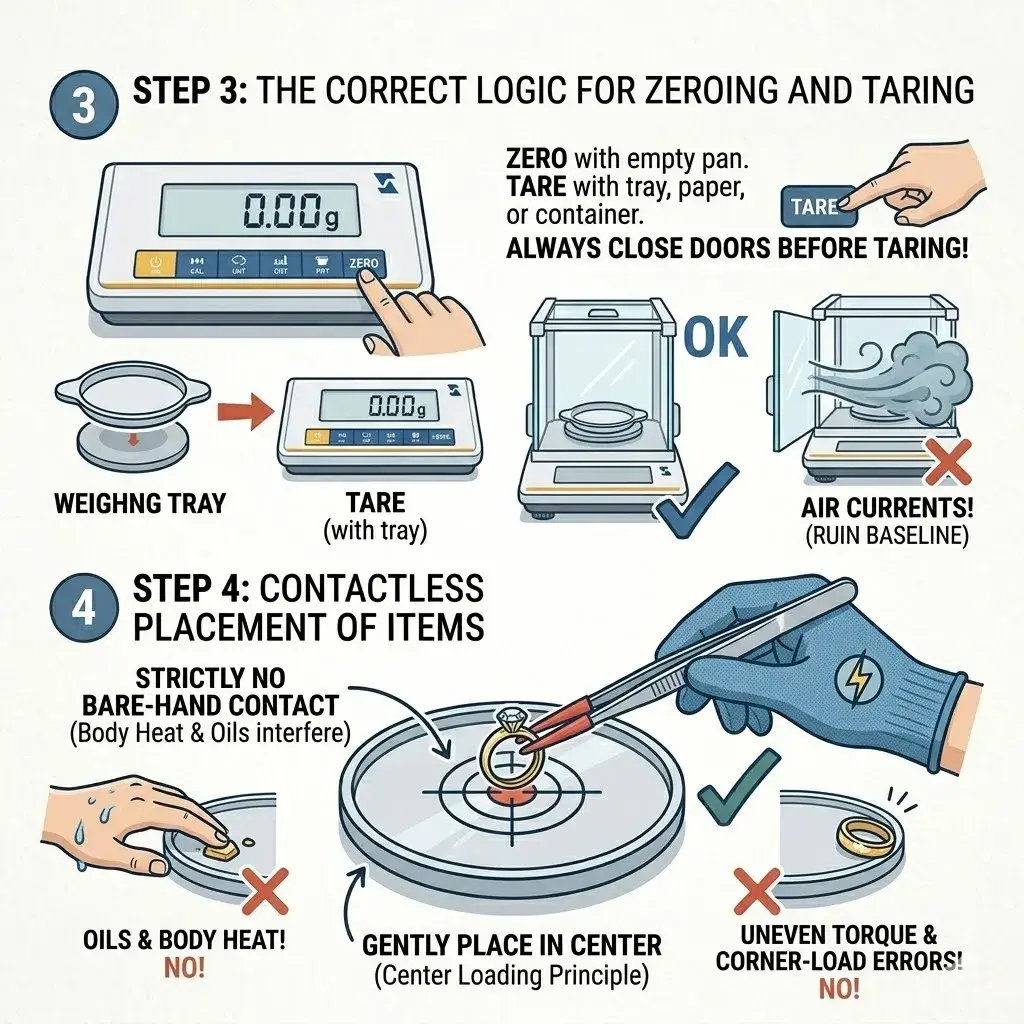
Step 3: The Correct Logic for Zeroing and Taring
Understand the difference between zero and tare. Press “Zero” if the empty pan does not read 0.00g. If weighing diamond chips or gold dust, use a tray. Place your weighing paper or small tray on the pan. Securely close all glass doors on the draft shield. You must close the doors before pressing the “Tare” button. Open doors allow air currents to ruin your baseline zero point.
Step 4: “Contactless” Placement of Items
Strictly no bare-hand contact. Oils and perspiration alter the item’s weight. Body heat also interferes with the sensors. Always use jewelry tweezers with silicone-protected tips. Anti-static gloves are another great choice. Gently place the jewelry directly in the center. This is the center loading principle. Off-center placement creates uneven torque. This causes frustrating corner-load errors.
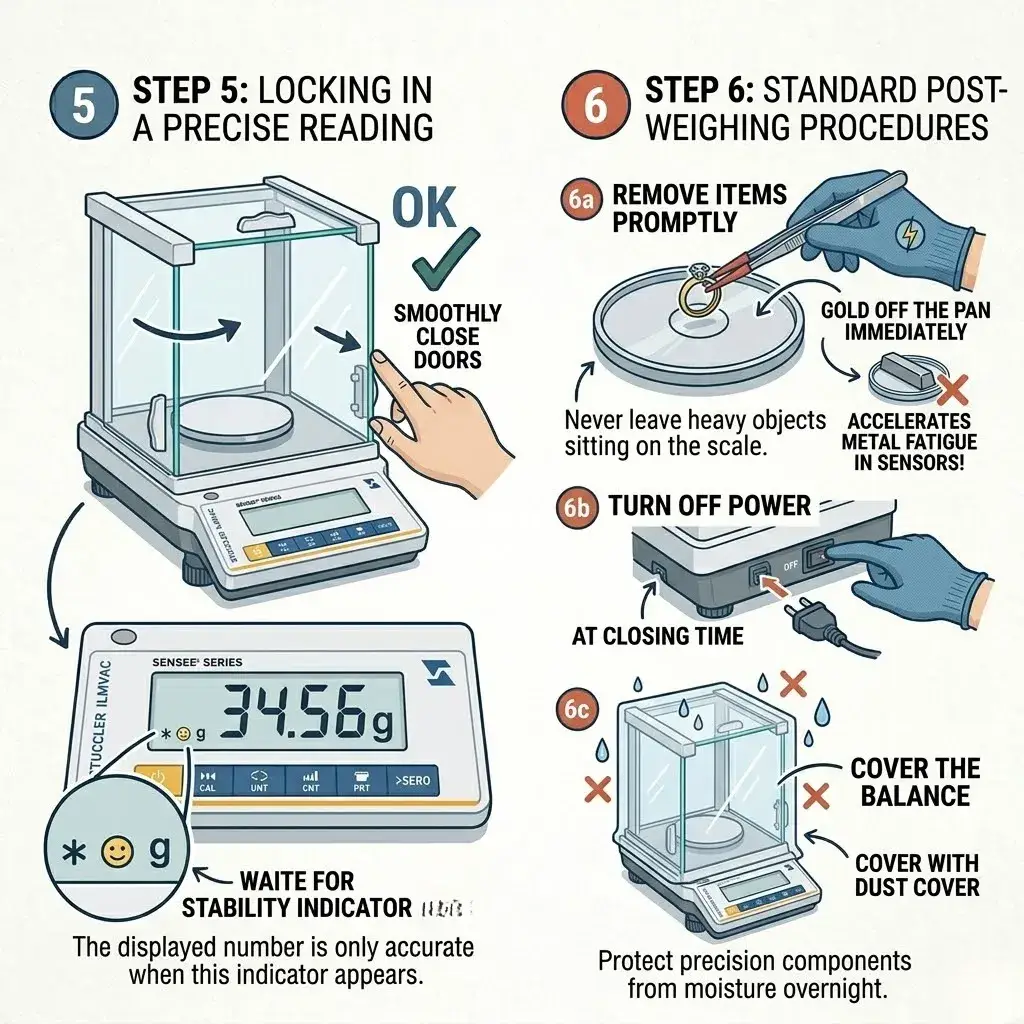
Step 5: Locking In a Precise Reading
Immediately and smoothly close the glass doors. Do not read the screen instantly. Wait for the stability indicator. Look at the corner of the display screen. You will see a small star (*), a smiley face, or a steady “g”. The displayed number is only accurate when this indicator appears.
Step 6: Standard Post-Weighing Procedures
Remove items promptly. Take the gold off the pan immediately after weighing. Never leave heavy objects sitting on the scale. This accelerates metal fatigue in the sensors. It drastically shortens your device’s lifespan. Turn off the power supply at closing time. Cover the balance with its dust cover. Protect precision components from moisture overnight.
III. Calibration and Routine Maintenance of the Balance
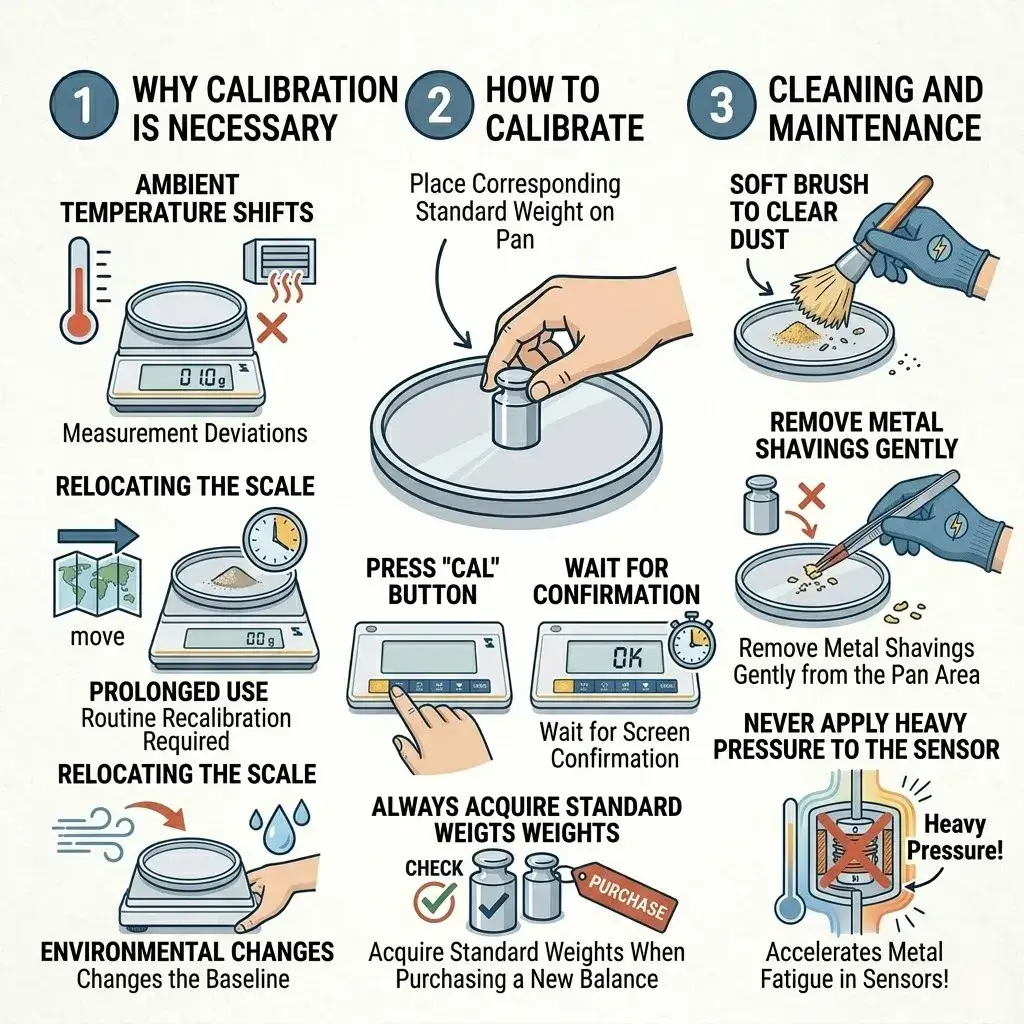
Why Calibration is Necessary
Environmental changes affect your scale over time. Ambient temperature shifts lead to measurement deviations. Relocating the scale changes the baseline. Prolonged use simply requires routine recalibration.
How to Calibrate
External calibration is a straightforward process. Press the “Cal” button on your display. Place the corresponding standard weight on the pan. Wait for the screen confirmation. Always acquire standard weights when purchasing a new balance.
Cleaning and Maintenance
Keep your equipment pristine. Use a soft brush to clear dust. Remove metal shavings gently from the pan area. Never apply heavy pressure to the sensor.
IV. Troubleshooting Common Reading Issues
1. Why does the reading keep fluctuating?
Check your room for active drafts or breezes. Verify that your workbench is entirely stable. Ensure the draft shield is securely closed. Check the area for static electricity interference.
2. Why do I get different weight readings for the same piece of jewelry?
Check the spirit level bubble again. Ensure the balance had sufficient warm-up time. Your balance likely requires immediate recalibration.
3. Why won’t the scale zero out properly?
Debris is likely trapped under the weighing pan. Carefully lift the pan and brush underneath. Drafts hitting an open shield also cause this.
4. Why is an error code flashing on the screen?
You probably overloaded the scale’s maximum capacity. Remove the heavy item immediately. Continuous overloading permanently damages the delicate sensor.
5. Why does the scale fail to turn on?
Inspect the power adapter connection securely. Test the wall outlet with another device. Ensure the power switch is fully engaged.
V. How to Choose a Reliable Gold Balance
Proper operation is only the beginning. Equipment quality serves as the fundamental cornerstone of accuracy. Focus closely on internal sensor quality. Fast response speeds save valuable time. Tightly sealed draft shields are non-negotiable. Strong after-sales support guarantees your investment.
As an industry-leading manufacturer and supplier, Stuccler delivers true excellence. We proudly operate our own dedicated manufacturing factory. We engineer and supply market-proven, high-precision jewelry balances. Every scale we produce meets rigorous quality standards. Our scales include highly accurate accompanying weights. We cater to artisan workshops and large-scale retail establishments alike.
Conclusion
Precise weighing honors your raw materials. It demonstrates strong responsibility toward your customers. Ultimately, accuracy protects your business’s profitability.Browse Stuccler’s selection of factory-direct jewelry balances and accessories today. Direct wholesale purchasing options are readily available for growing businesses.