

In quantitative analysis, the analytical balance is your ultimate truth-teller. Today’s precision laboratories aren’t just limitless-budget pharma giants—they are agile, ROI-driven innovators in R&D, industrial QC, and academia. Cutting through the 2026 marketing fluff, this guide evaluates the market’s top-tier and most pragmatic balances based on innovation, compliance, environmental resilience, and true value for money.
I. Key Criteria for Selecting Balances for Precision Laboratories
Selecting the right high-precision balance requires matching the instrument’s physics to your laboratory’s actual working environment and regulatory constraints.
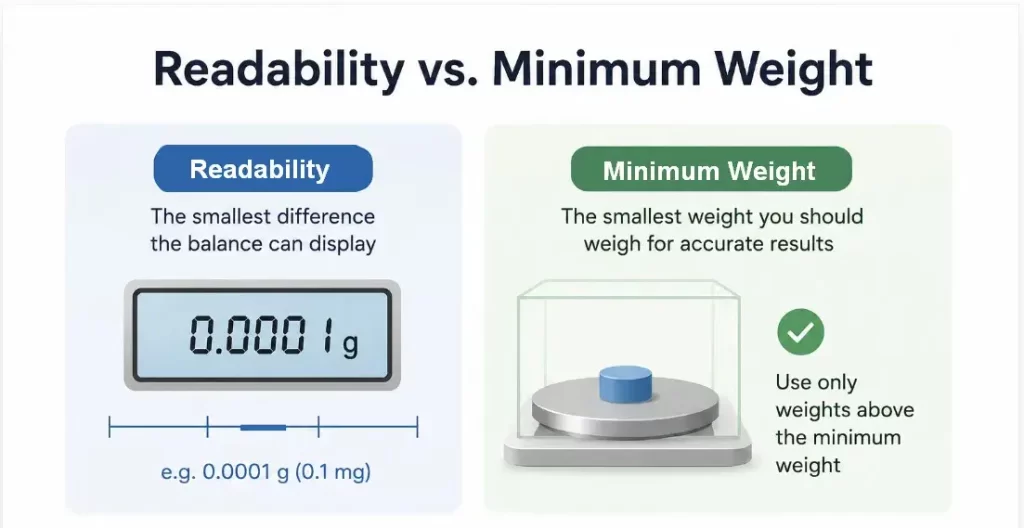
Core Parameters: Readability and Minimum Weight
While readability (the smallest difference between two weight values) is the most advertised metric, minimum weight is what dictates accuracy. According to global standards like the United States Pharmacopeia (USP), an analytical balance should never be used to weigh a sample smaller than its determined minimum weight threshold—typically where the measurement uncertainty is less than 0.1%. If your lab routinely handles sub-milligram or single-digit milligram samples, your minimum weight requirement will immediately narrow your choices.
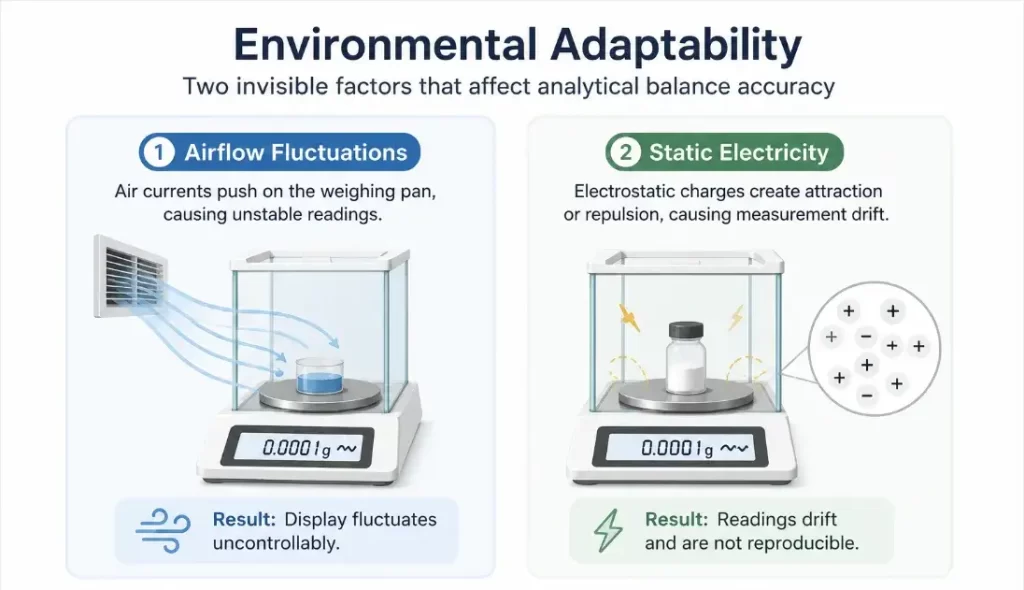
Environmental Adaptability: Airflow and Static Electricity
An analytical mass comparator does not measure weight directly; it measures the downward force exerted by a mass. This makes it highly vulnerable to two invisible enemies:
- Airflow Fluctuations: Laminar flow from HVAC units or the draft inside a safety enclosure can create dynamic air currents that push down on a standard weighing pan, causing the final digit on the display to dance uncontrollably.
- Static Electricity: Electrostatic charges on plastic tare containers, glass vials, or dry powders generate localized electrical fields. These fields exert a parasitic magnetic attraction or repulsion between the sample and the balance housing, leading to massive, non-reproducible measurement drift.
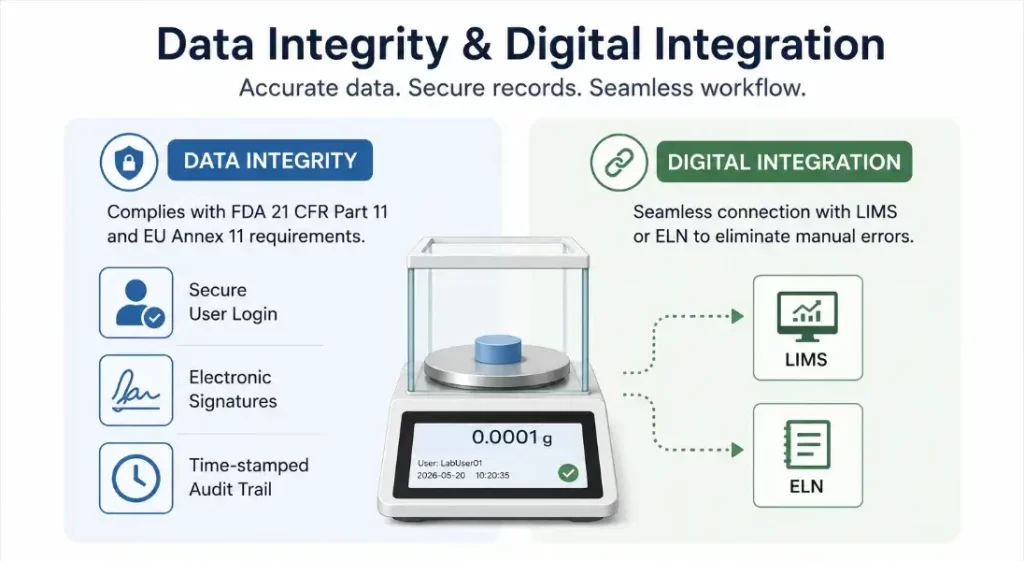
Data Integrity and Digital Integration
For regulated spaces, a balance is an entry point for data. It must comply with FDA 21 CFR Part 11 and EU Annex 11, which demand secure user logging, electronic signatures, and a time-stamped, unalterable audit trail. Furthermore, modern laboratory workflows require seamless integration with Laboratory Information Management Systems (LIMS) or Electronic Lab Notebooks (ELN) to eliminate human transcription errors.
II. A Showdown of Top-Tier Analytical Balances
For organizations operating under intense regulatory scrutiny or pushing the absolute boundaries of molecular measurement, these premium instruments represent the pinnacle of German and Swiss engineering.
1. Mettler Toledo XPR Series — Best Overall & Best for Pharma Compliance
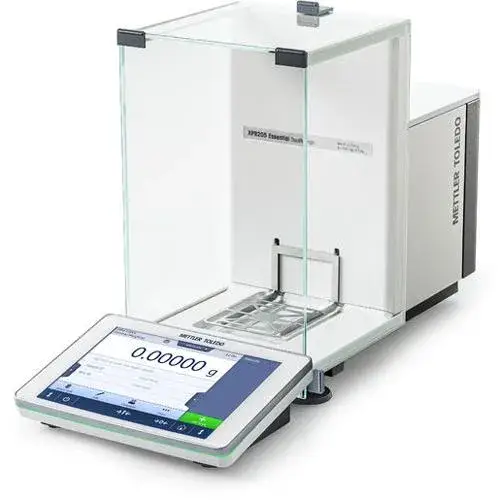
The Mettler Toledo XPR series stands as the gold standard for compliance-driven, high-throughput environments. It is engineered not just as a standalone weighing tool, but as an active network node within a fully digitized laboratory ecosystem.
Key Highlights:
- SmartGrid Weighing Pan: By replacing the traditional solid metal disk with a unique, open-structure mesh pan, Mettler Toledo allows internal air currents to pass straight through. This drastically reduces stabilization times and ensures rapid data capture.
- StaticDetect™ Technology: The XPR automatically monitors and checks for the presence of electrostatic charges on the sample or container. It measures the potential weighing error and provides a warning if user-defined thresholds are exceeded, ensuring operators do not log compromised data.
- LabX Software Ecosystem: This central software suite pushes custom Standard Operating Procedures (SOPs) directly onto the balance’s 7-inch touchscreen. It handles all user authentication, tracking every calibration and tare operation to guarantee absolute data integrity.
- Best For: Multinational pharmaceutical companies, contract research organizations (CROs), and highly regulated QA/QC facilities where data audit failures are not an option.
2. Sartorius Cubis II — Best Configurable & Best for Challenging Environments
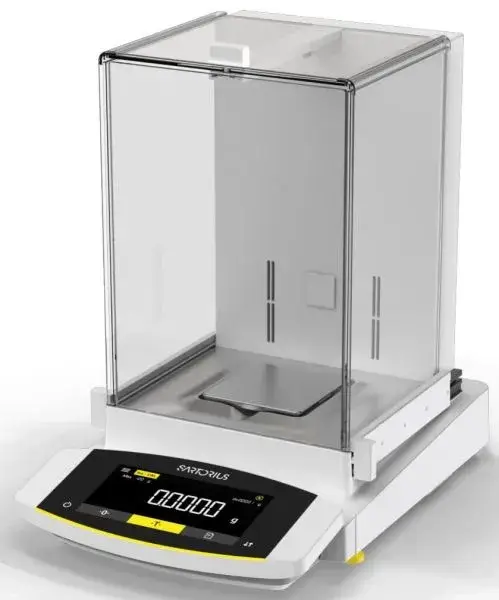
The Sartorius Cubis II is the ultimate chameleon of high-end weighing instruments. It is built upon a philosophy of 100% modular customization, allowing the user to configure everything from the display interface to the specific type of draft shield.
Key Highlights:
- 4th-Generation Monolith Sensor: The heart of the Cubis II is a weighing cell machined from a single block of specialized alloy. This monolithic architecture minimizes thermal expansion discrepancies, providing exceptional linearity and rapid thermal stabilization in erratic room conditions.
- Titanium Weighing Components: The choice of high-grade titanium for internal components ensures that the balance remains entirely non-magnetic and highly resistant to aggressive chemical spills.
- QApp Software Architecture: Instead of forcing you into a massive, monolithic enterprise software package, the Cubis II uses a localized app-store model. Users download individual “QApps” directly to the balance terminal to manage specific tasks like pipette calibration, USP minimum weight checks, or basic data transfer.
- Best For: Precision laboratories requiring balance integration inside specialized enclosures like fume hoods, laminar flow benches, or anaerobic gloveboxes.
III. A Choice Offering High Value and ROI
While premium instruments are engineering marvels, many modern precision laboratories do not require enterprise-level network architectures or automated glass doors. For these practical facilities, paying a massive premium for unused software compliance modules represents a poor allocation of capital.
Stuccler Analytical Balance (e.g., SE/JD Series) — Best Value & Best Practical Choice for General Precision Labs
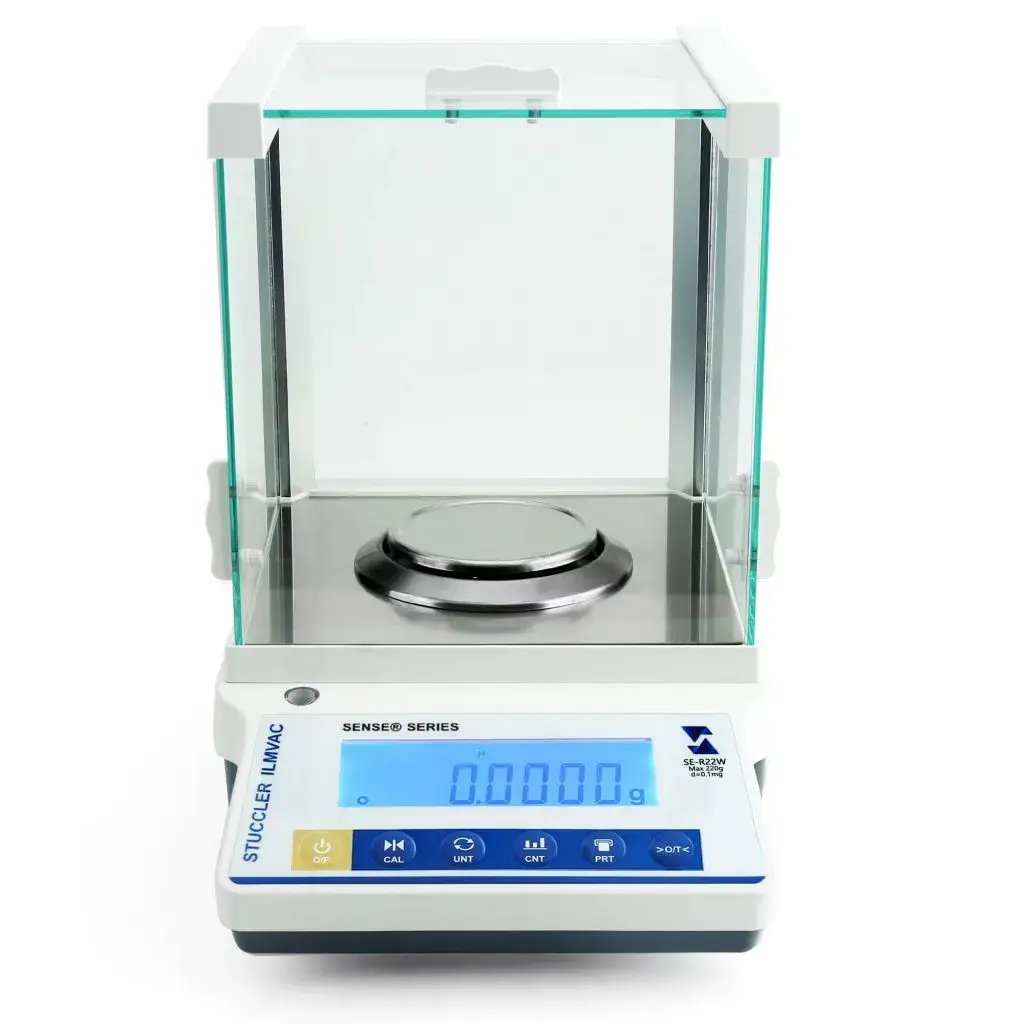
The Stuccler analytical balance line represents a highly disruptive, pragmatic approach to the 2026 weighing market. Positioned as a cost-performance alternative, it strips away the redundant software licensing fees of western legacy brands while doubling down on robust, industrial-grade core hardware.
Key Selling Points:
- No Compromise on Core Hardware: Unlike cheap electronic scales that rely on lower-grade strain gauge load cells, Stuccler utilizes a true Electromagnetic Force Compensation (EMFC) sensor. This is the exact same fundamental physical mechanism used by legacy European brands. By utilizing EMFC technology, Stuccler ensures long-term calibration retention, rapid linearity adjustments, and high repeatability at the 0.1 mg level.
- Superior Mechanical Vibration Resistance: Recognizing that practical labs are rarely perfectly isolated from real-world physics, Stuccler integrates a specialized multi-stage digital filtering algorithm. Whether your bench is sharing space with a vibrating high-speed centrifuge, a roaring laboratory fume hood extractor, or structural tremors from nearby urban traffic, the software smooths out the background noise to deliver fast, repeatable readings.
- No “Feature Overload” or Hidden Costs: The beauty of the SE and JD series lies in their operational independence. Unless your facility is bound by rigid FDA data-logging audits, buying an over-engineered balance means paying for features you will turn off. Stuccler delivers precise weight data at roughly one-fifth of the acquisition cost of premium competitors, with zero annual software subscription renewals, no mandatory maintenance lockouts, and no proprietary accessory requirements.
- Ideal For: Application-focused precision laboratories, including university chemical research and educational labs, agricultural and food safety testing centers, routine industrial compounding benches, and high-value precious metals or jewelry assay offices.
IV. Side-by-Side Comparison of Key Specifications
| Brand/Model | Key Distinction/Award | Core Hardware Technology | Audit Trail/System Integration | Price Range/Value |
| Mettler Toledo XPR | Best Overall & Pharma Compliance | Grid weighing pan + Automatic static detection | Excellent (Seamless central LabX software ecosystem) | Very High (Premium investment) |
| Sartorius Cubis II | Best Modularity & Airflow Resistance | 4th-gen monolithic sensor + Titanium pan | Strong (On-terminal MCA screen / Local QApp eco) | High (Premium tier) |
| Stuccler Analytical | Best Value & Pragmatic Choice | Electromagnetic Force Compensation (EMFC) | Basic (Direct raw data export via RS232/USB) | Highly Competitive (Exceptional ROI) |
V. Purchasing Decision Guide
Every laboratory has a unique operating reality. Your choice shouldn’t depend on which balance has the longest feature list, but on which tool solves your specific daily constraints.
- The Regulatory Imperative: If your laboratory operates within the heavily policed pharmaceutical, clinical, or advanced biotechnology sectors—where you face routine audits and must strictly adhere to 21 CFR Part 11 frameworks—maximize your capital budget and select the Mettler Toledo XPR. The administrative peace of mind offered by the LabX platform outweighs the high upfront price.
- The Spatial Challenge: If your workspace features intense physical constraints—such as turbulent, high-velocity airflow within a compounding fume hood, or the cramped, awkward spatial layout of an inert gas glovebox—choose the Sartorius Cubis II. Its modular separation of the weighing cell from the control terminal allows for ergonomic setups where other balances fail.
- The ROI Focus: If you prioritize direct Return on Investment for everyday high-precision weighing—and your lab handles routine industrial quality control, agricultural material grading, polymer development, or academic thesis research without needing complex, multi-user audit trail software—the Stuccler Analytical Balance is your smartest financial choice. It delivers the exact same 0.1 mg scientific accuracy as its luxury peers while leaving thousands of dollars in your equipment budget for other critical instruments.
Summary
In 2026, finding the best analytical balance is no longer about blindly purchasing the most expensive model on the market. It is an exercise in resource optimization. By aligning your facility’s true regulatory needs and physical benchtop conditions with the distinct strengths of Mettler Toledo, Sartorius, or Stuccler, you can achieve world-class mass determination without overpaying for redundant features.
Ready to Upgrade Your Precision Weighing Without the Premium Markup? As a direct manufacturer with our own factory, Stuccler eliminates the middleman and the bloated software licensing fees of legacy brands. We bring uncompromised, industrial-grade EMFC technology directly to your benchtop.
Whether you are equipping a single quality control station, seeking factory-direct wholesale pricing for an entire university department, or exploring global distributor partnerships, our team is ready to support your operational needs. Contact Us for a Custom Quote today and start maximizing your laboratory’s ROI.