
Carat weighing allows no margin for error, as even a 0.01 ct deviation in high-value gemstone trading can cause severe financial losses. However, high-precision scales operating at 0.001 g (0.005 ct) are highly vulnerable to airflow, bench vibrations, and static charges. Achieving stable, jumping-free readings requires a deep understanding of core scale specifications and specialized hardware design.
I. Core Specifications of High-Precision Jewelry Scales
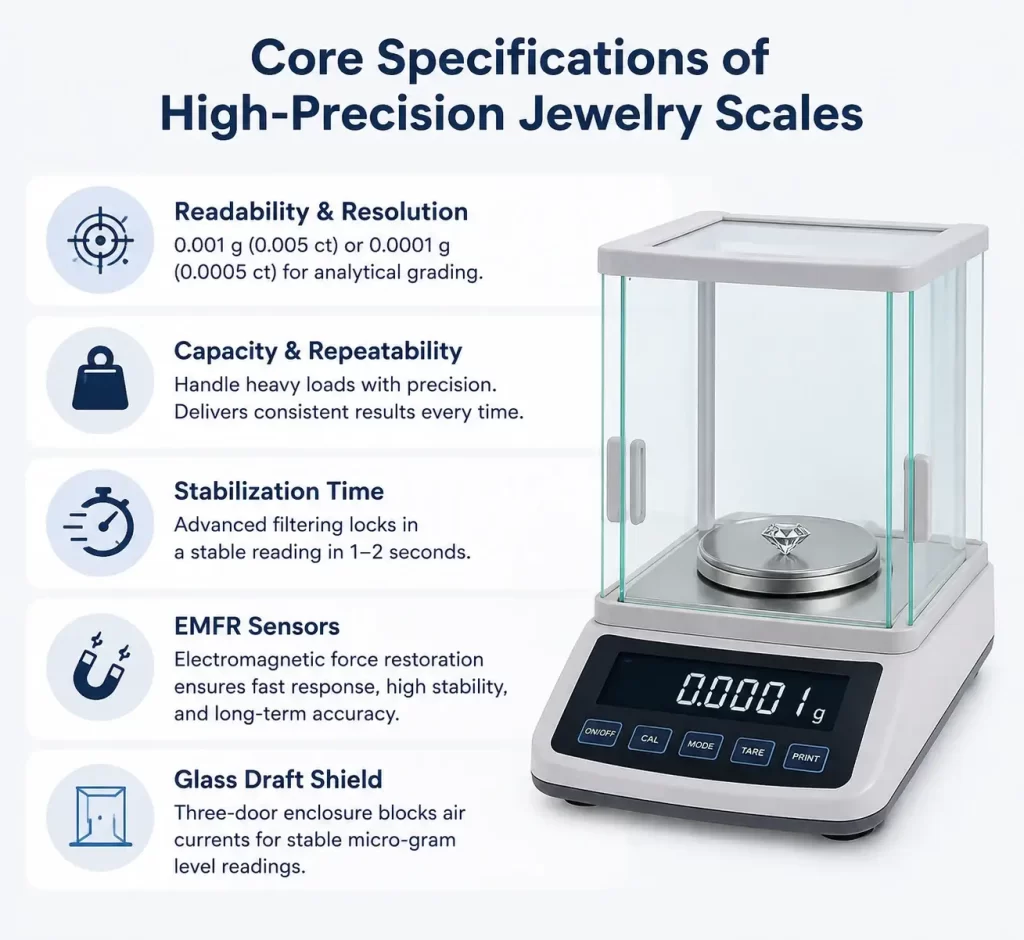
Evaluating professional jewelry scales requires looking beyond surface capacity to understand the key technical parameters and hardware architecture that ensure measurement stability:
- Readability and Resolution: For carat weighing, readability dictates the smallest increment the balance displays. Precision carat scales typically offer resolutions of 0.001 g (0.005 ct) or 0.0001 g (0.0005 ct for analytical grading).
- Capacity and Repeatability: Scale capacity must cover heavier parcels without sacrificing precision. Repeatability (standard deviation) measures the balance’s ability to display identical results when the same gemstone is weighed repeatedly under unchanged conditions.
- Stabilization Time: In fast-paced commercial settings, waiting for a fluctuating readout slows operations. Advanced scales utilize digital filtering algorithms to lock in a stable reading within 1 to 2 seconds.
- Electromagnetic Force Restoration (EMFR) Sensors: Unlike standard strain-gauge load cells, EMFR sensors utilize electromagnetic coils within a magnetic field to counterbalance applied loads. This delivers ultra-fast response times, superior thermal stability, and long-term measurement repeatability.
- Enclosed Glass Draft Shields: External air movement disrupts micro-gram level readings. A three-door, high-density glass draft shield isolates the weighing chamber, creating a draft-free microenvironment essential for stable carat reads.
II. Key Features to Look for in a Carat Scale
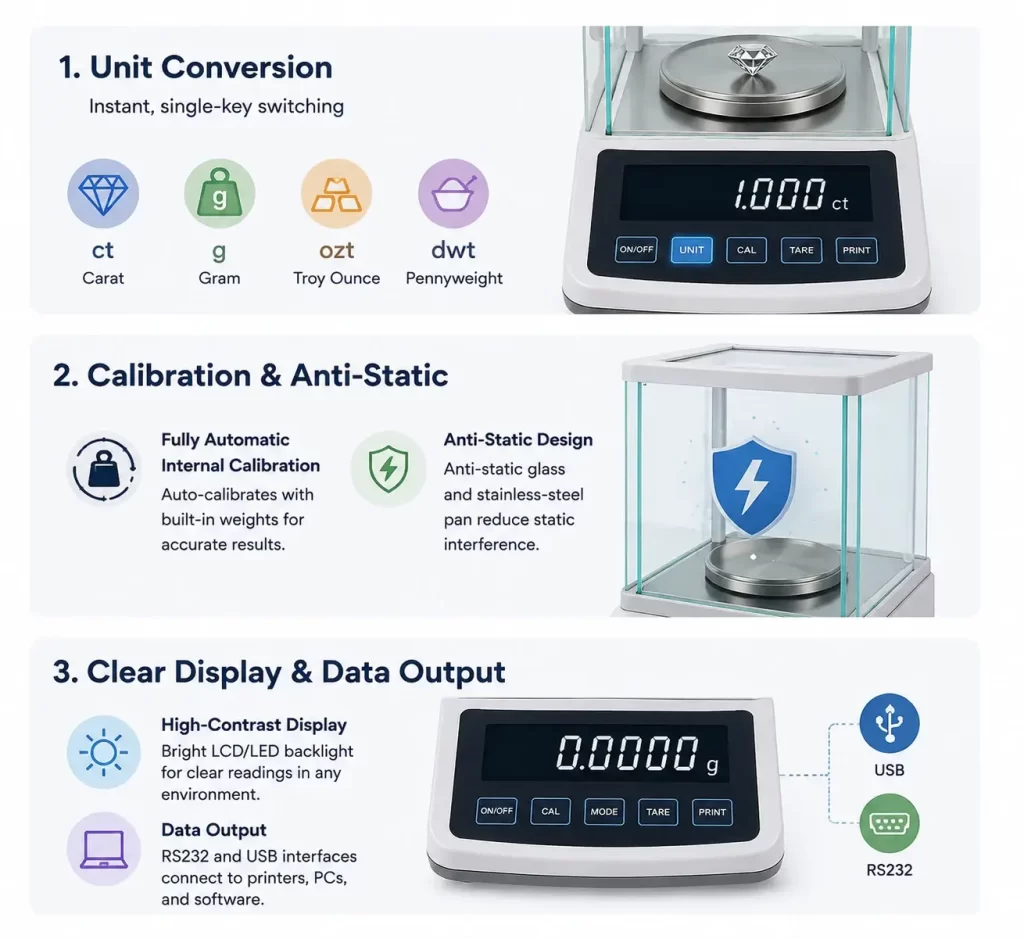
Beyond raw sensor precision, daily usability and integration into commercial workflows depend on specific functional features.
Unit Conversion
Gemstone traders routinely operate across international markets using different measurement units. High-precision balances must support instant, single-key switching between:
- Carat (ct): Primary unit for loose diamonds and colored gemstones.
- Gram (g): General laboratory and bullion measurements.
- Troy Ounce (ozt): Precious metal raw materials.
- Pennyweight (dwt): Jewelry manufacturing and alloy casting.
Calibration and Anti-Static Mechanisms
Temperature shifts throughout the day alter internal mechanical tolerances, leading to measurement drift. Balances equipped with Fully Automatic Internal Calibration (Internal CAL) use built-in motor-driven weights to auto-calibrate based on elapsed time or temperature changes, eliminating manual weight handling. Additionally, static charges on plastic gem trays or synthetic stones can pull or push on the weighing pan; anti-static glass coatings and conductive stainless-steel pans dissipate these charges safely.
Clear Display and Data Output
High-contrast LCD or LED backlit screens ensure clear visibility under bright showroom spotlights or dim gemological darkrooms. Integrated RS232 and USB interfaces allow direct connection to label printers, computers, and inventory management software, reducing manual entry errors when issuing grading reports or certificates.
III. Recommended Jewelry Scales for Stable Carat Weighing
Select the balance model that best aligns with your operational requirements and environmental demands.
Option 1: SENSE-JD Series — Ultimate Precision for Gemstone & Diamond Grading
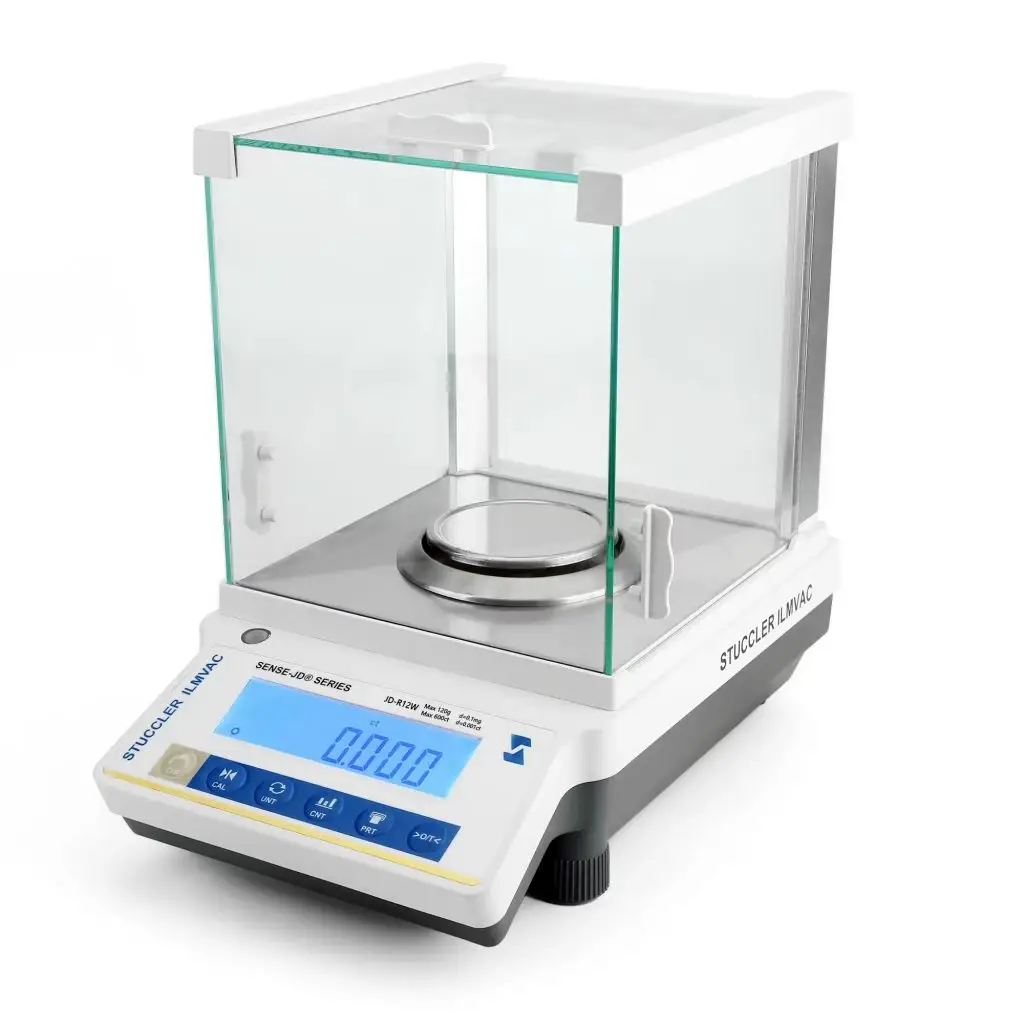
- Positioning: Designed for diamond grading laboratories, gemological institutes, loose stone importers, and high-end stone-matching workshops.
- Core Specifications: Powered by an advanced EMFR sensor and enclosed in a high-clarity glass draft shield. It features a six-level adjustable anti-vibration filter to neutralize benchtop tremors, paired with fully automatic internal calibration.
- Precision & Capacity: Readability options include 0.001 g/0.01 ct (or 0.0001 g/0.0005 ct on analytical configurations), with weighing capacities spanning 120 g/600 ct up to 2,020 g/10,100 ct.
- Applications: Loose diamond certification, carat verification for high-carat colored stones, and precise parcel sorting.
Option 2: SHINE Series — Fast & Stable Performance for Gold & Workshop Weighing
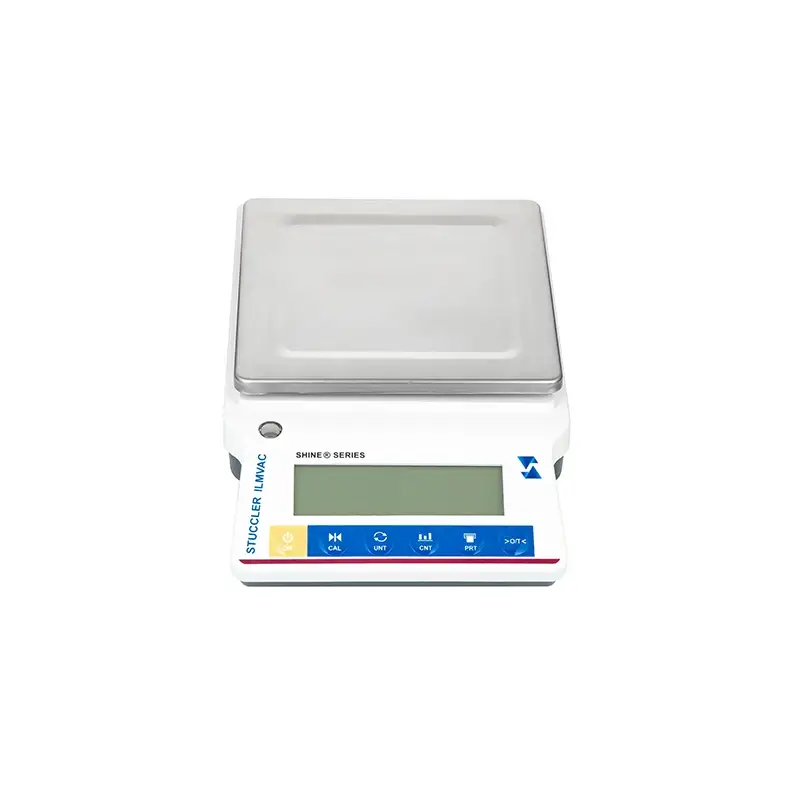
- Positioning: Engineered for custom jewelry ateliers, precious metal buyers, pawn shops, and high-volume retail counters.
- Core Specifications: Outfitted with a rapid-response anti-vibration system and a low-profile/open-top draft ring for quick-access weighing. Supports immediate unit conversions (g, ozt, ct, dwt).
- Precision & Capacity: Offers wide-range capacities from 100 g up to 20,000 g, delivering multi-purpose flexibility for heavy metal ingots and delicate components alike.
- Applications: Primary focus on gold and precious metal weighing, finished jewelry pieces, and larger carat gemstone parcels where high-speed counter handling takes precedence over analytical micro-gram shielding.
III. Maintenance and Troubleshooting for Long-Term Precision
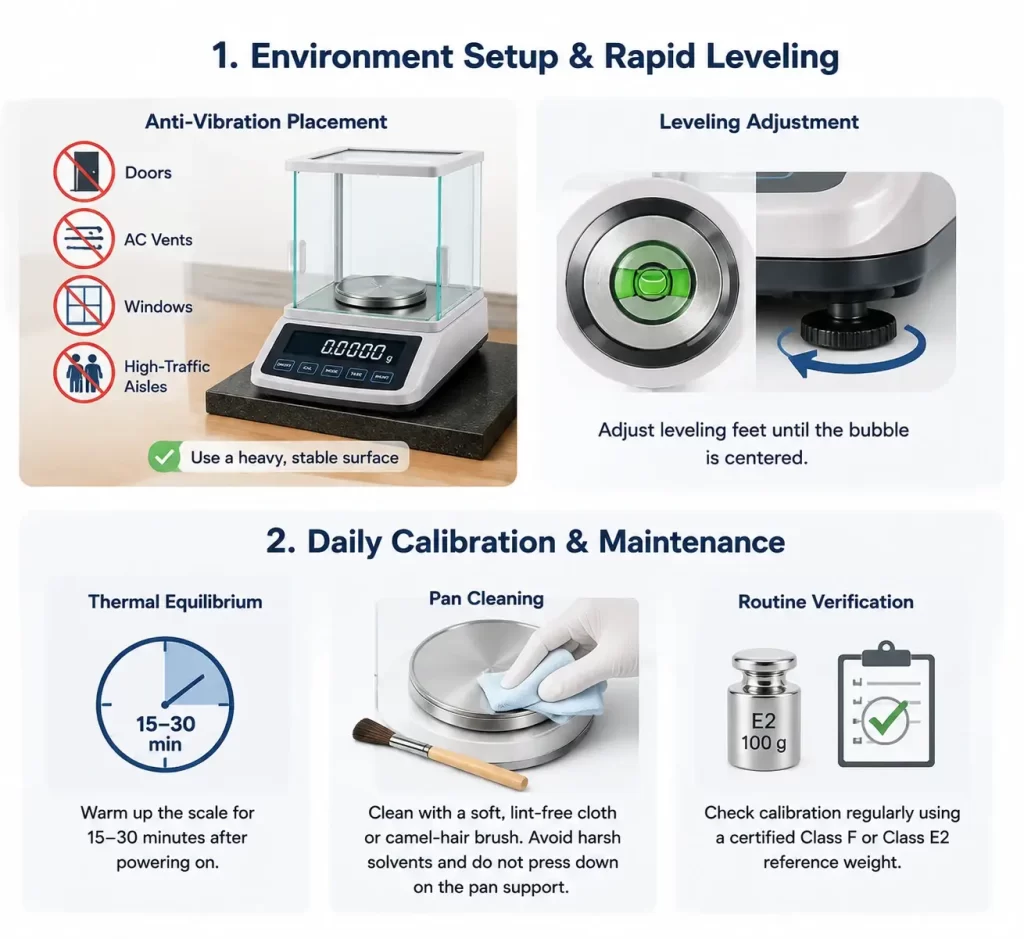
Even top-tier balances require proper setup and routine care to maintain factory-grade accuracy.
Environment Setup & Rapid Leveling
- Anti-Vibration Placement: Position the scale on a heavy granite or solid wood table, away from doors, air conditioning vents, windows, and high-traffic aisles.
- Leveling Adjustment: Inspect the built-in leveling bubble before every session. Adjust the leveling feet until the bubble sits dead-center in the indicator ring to prevent off-center loading errors.
Daily Calibration & Maintenance
- Thermal Equilibrium: Allow the scale to warm up for 15–30 minutes after plugging it in to stabilize internal electronics.
- Pan Cleaning: Clean the stainless-steel weighing pan using a soft, lint-free cloth or camel-hair brush. Never use harsh solvents, and avoid pressing down heavily on the pan support spindle.
- Routine Verification: Periodically check calibration status using a certified Class F or Class E2 external reference weight to catch drift early.
Wholesale Sourcing & Commercial Purchasing Support
Selecting the right equipment requires dependable hardware backed by solid commercial support. As a dedicated Jewelry Scales manufacturer and supplier, Stuccler provides factory-direct access to professional-grade weighing instruments. We deliver end-to-end support tailored to international distributors, retail chains, and manufacturing facilities:
- Factory-Direct Pricing & Wholesale Supply: Flexible bulk ordering policies without middleman markups.
- Quality Assurance & Warranty: Comprehensive warranty coverage on all sensor assemblies and electronic components.
- Technical Support: Direct engineering support for customization, OEM requirements, and technical troubleshooting.
For detailed product catalogs, bulk purchasing inquiries, or specific equipment selection assistance, contact the Stuccler technical sales team today.