

In high-precision chemistry labs, fluctuating analytical balance readings are rarely caused by mechanical failure. Instead, they typically stem from microscopic environmental shifts and subtle operational habits that introduce hidden weighing errors.
Core Error Troubleshooting Matrix
Before diving into deep physical mechanisms, use this rapid diagnostic matrix to troubleshoot immediate stability issues on your weighing pan.
| Symptom | Root Cause | Scientific Principle (Mechanism) | Core Solution (Action) |
| Reading consistently decreases | Sample temperature is higher than ambient temperature | Generates upward airflow and convection currents; buoyancy effects | Place the sample in a desiccator to cool to room temperature before weighing. |
| Reading consistently increases | Sample absorbs moisture or evaporates | Absorption of atmospheric moisture / Evaporation of solvents | Use a covered, airtight weighing bottle; perform rapid weighing. |
| Reading fluctuates randomly/irregularly | Airflow interference or static electricity accumulation | Air currents impacting the pan / Electrostatic attraction | Close the draft shield doors / Install a static eliminator. |
| Inconsistent results in repeated weighings | Sample not centered or balance not calibrated | Eccentric loading error / Temperature drift | Center the sample on the pan / Perform internal calibration (Cal). |
1. Environmental Interference: The “Invisible Killers”
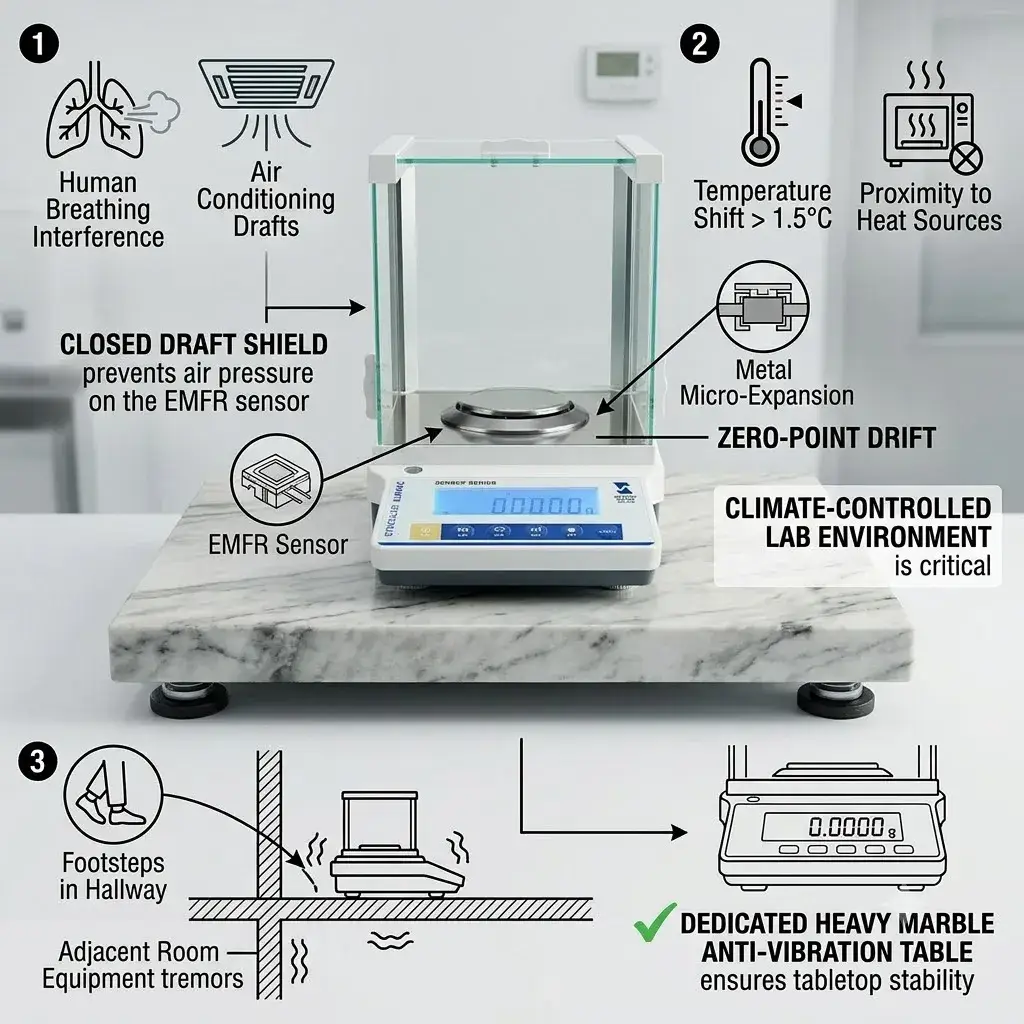
Modern high-precision laboratory balances rely on Electromagnetic Force Restoration (EMFR) sensors. These systems measure the electrical current required to counter the weight of an object. Because EMFR technology is incredibly sensitive, ambient laboratory conditions easily disrupt it.
Airflow Interference (Air Currents)
Faint air currents exert vertical pressure on the weighing pan. This looks like weight fluctuations. Human breathing compromises the sensor. Air conditioning vents create invisible drafts. An open draft shield door alters the internal microclimate instantly.
- Best Practice: Close all draft shield doors before recording the final mass. Position the analytical balance away from doors, windows, and HVAC vents.
Temperature and Heat Transfer (Temperature Drift)
Temperature changes ruin calibration. A shift exceeding 1.5℃ causes micro-expansions inside the EMFR sensor structure. This manifests as zero-point drift. Direct sunlight distorts the internal optics. Proximity to laboratory drying ovens introduces thermal currents.
- Best Practice: Place your precision laboratory balance on a heavy marble anti-vibration table. Keep it out of direct sunlight. Maintain a constant 24-hour climate-controlled laboratory environment.
Vibration and Tabletop Stability
Low-frequency vibrations ruin data. Footsteps in the hallway transfer through the floor. Equipment operating in adjacent rooms creates microscopic tremors. These vibrations reach the EMFR cell, preventing the final decimal digit from stabilizing.
- Best Practice: Use a dedicated, high-mass weighing table. Ensure the table does not touch adjacent walls or laboratory benches.
2. Samples and Containers: Overlooked Physical and Chemical Properties
Sometimes, a perfectly calibrated analytical balance yields incorrect data because of the sample’s physical state.
Why Weighing a Crucible While It Is Still Hot Is a Common Error (Convection Buoyancy)
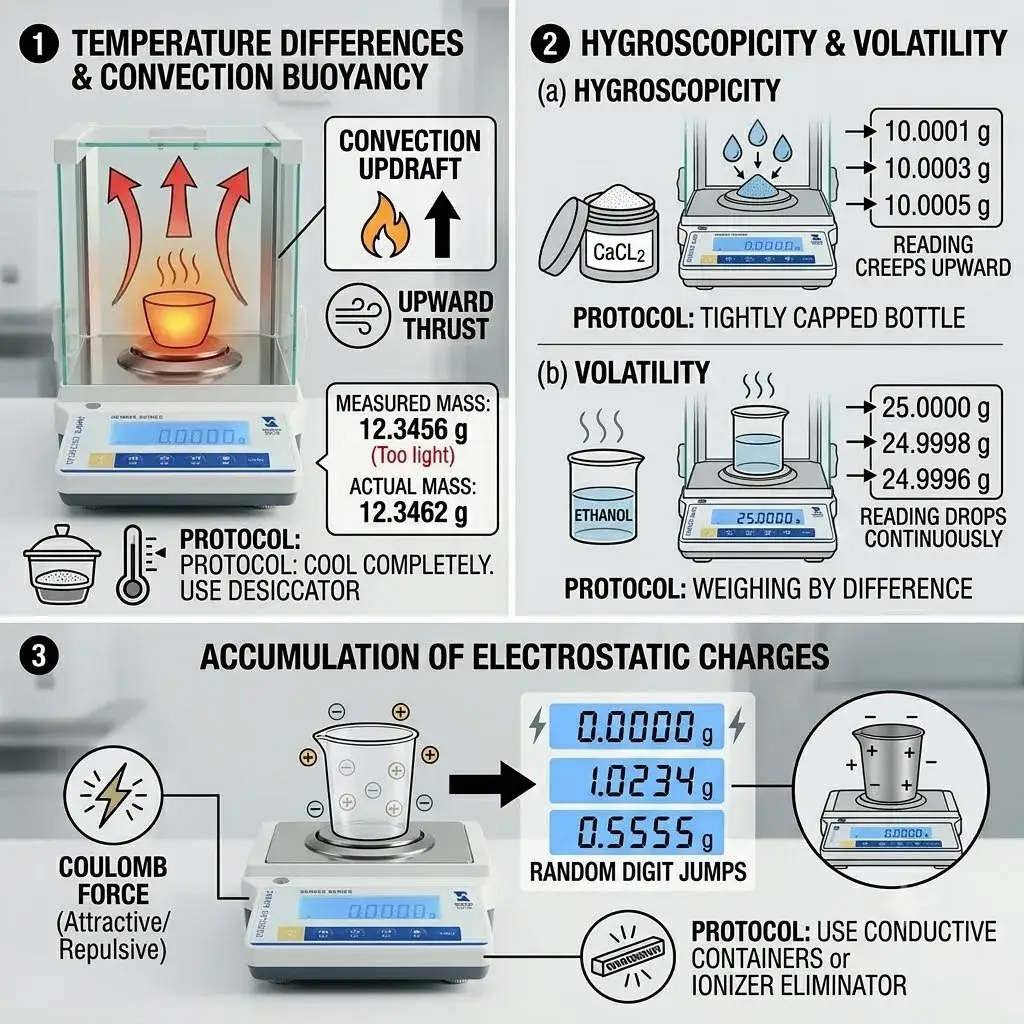
One of the most frequent mistakes in gravimetric analysis is attempting to weigh a crucible or beaker while it is still hot. A warm container heats the surrounding air inside the draft shield, creating localized thermal updrafts. This rising air exerts an upward lift on the weighing pan, causing the displayed measurement to read lighter than the sample’s actual mass.
- Protocol: Always cool crucibles and sample containers completely inside a desiccator to balance sample temperatures with the ambient air of the balance room before placing them on the pan.
Hygroscopicity and Volatility
Chemical reagents interact with air. Anhydrous calcium chloride rapidly absorbs atmospheric moisture. This makes the balance reading creep upward. Conversely, volatile solvents like anhydrous ethanol evaporate during the process. This causes the numbers to drop continuously.
- Protocol: Use a tightly capped glass weighing bottle. Employ the “weighing by difference” method for volatile compounds. Work quickly.
Accumulation of Electrostatic Charges
Static electricity causes random digit jumps. Dry seasons increase this risk. Plastic beakers, glass pipettes, and fine chemical powders hold static charges easily. This creates a net Coulomb force between the sample container and the balance housing, causing the reading to jump randomly.
- Protocol: Choose conductive metal or specialized anti-static glassware. For persistent issues, install an ionizer static eliminator inside the weighing chamber.
3. Operational Protocols: Treating Precision Instruments with Care
Human error remains a major source of analytical variance. Standardized habits prevent costly re-testing.
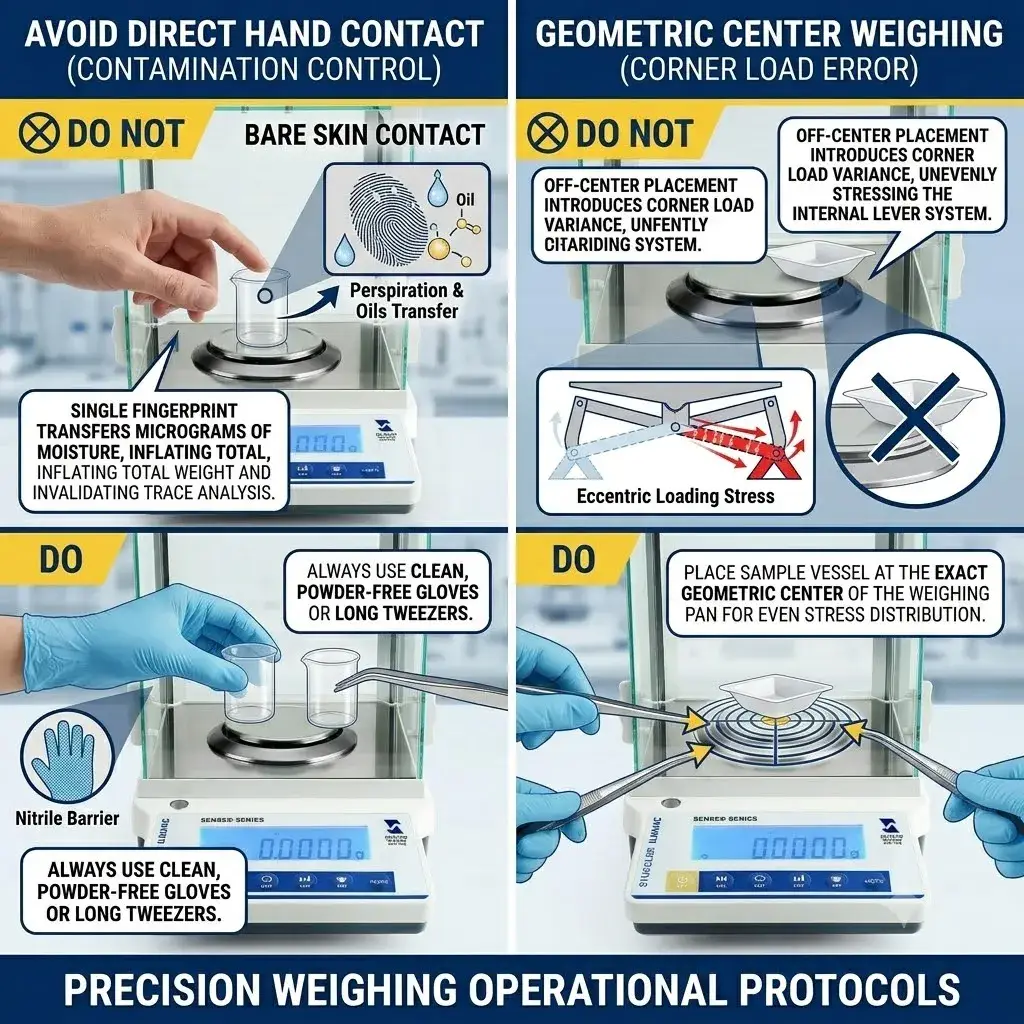
- Avoid Direct Hand Contact (Contamination Control): Bare skin carries natural oils and perspiration. A single fingerprint transfers micrograms of moisture to a sample container. This skin oil directly inflates the recorded total weight, invalidating trace analysis. Always use long stainless steel tweezers or wear clean, powder-free nitrile gloves.
- Geometric Center Weighing (Corner Load Error): Off-center placement skews results. Placing a weighing boat on the edge of the pan stresses the internal lever system unevenly. This introduces an eccentric loading error, known as corner load variance. Always place the sample vessel at the exact geometric center of the weighing pan.
4. Maintenance and Calibration: Ensuring Compliance and Long-Term Accuracy
Long-term accuracy requires rigorous instrument maintenance and verification.
Internal Calibration Trigger Mechanisms
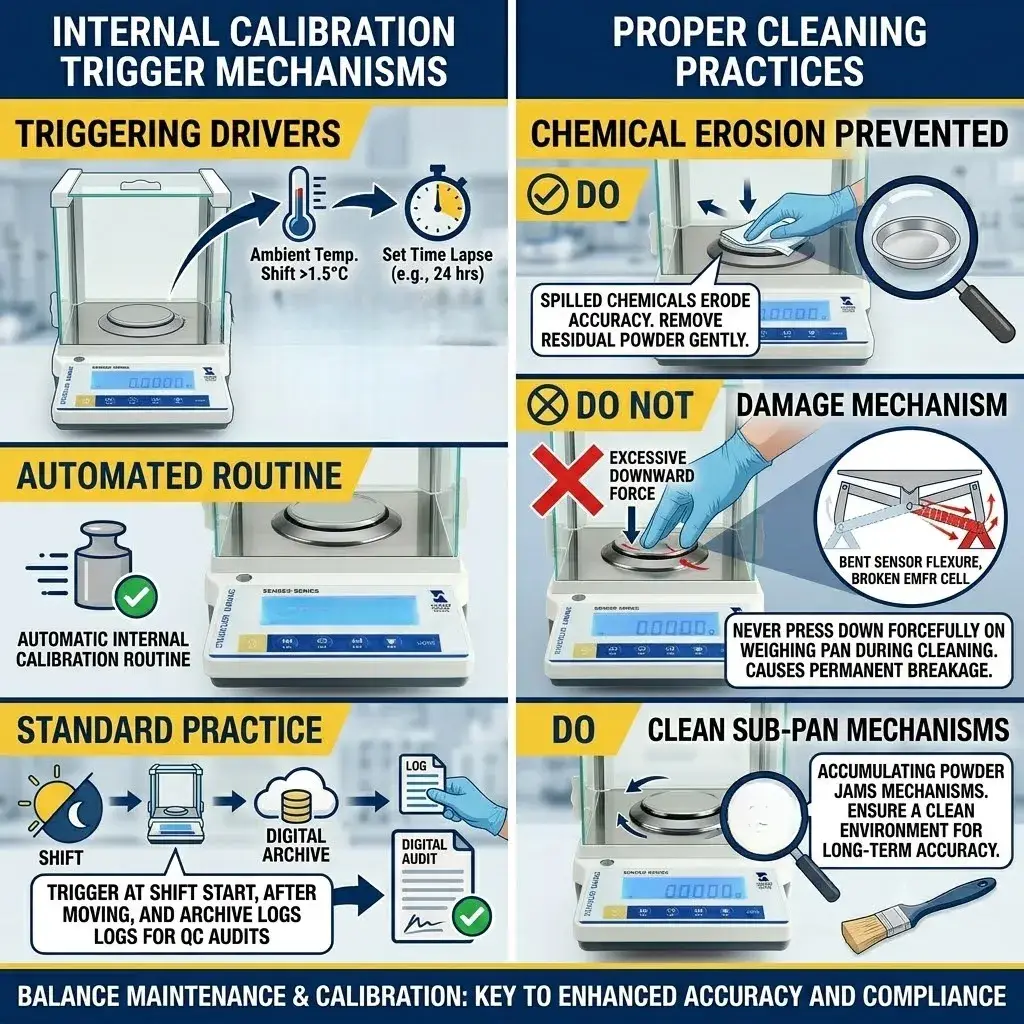
High-quality laboratory balances mitigate drift through automated calibration. Premium instruments feature an internal motorized test weight. Systems like the isoCAL function monitor ambient temperature shifts. When the balance detects a temperature variance or a set time lapse, it runs an internal calibration routine automatically.
- Standard Practice: Trigger an internal calibration cycle at the start of every shift. Recalibrate immediately if the unit is moved. Archive these digital logs to pass quality control audits.
Proper Cleaning Practices
Spilled chemicals erode accuracy. Residual powder accumulating beneath the weighing pan jams the sub-pan mechanisms. Clean gently. Never press down forcefully on the weighing pan during cleaning. Excessive downward force bends the delicate sensor flexure mechanism, permanently breaking the EMFR cell.
Sourcing Laboratory-Grade Weighing Systems
Eliminating weighing errors requires both proper technique and dependable, high-precision instrumentation. For research facilities, university laboratories, and industrial quality control centers demanding flawless repeatability, transitioning to professional-grade analytical balances is essential to prevent costly analytical mistakes.
As a certified laboratory equipment manufacturer, Stuccler designs and builds high-performance 0.1mg analytical balances optimized to withstand subtle environmental challenges, featuring responsive EMFR sensors and advanced internal calibration.
Ideal Applications: University chemistry laboratories, pharmaceutical research institutions, and industrial material testing facilities. (For customized configurations, factory-direct pricing, or bulk supply inquiries, please contact our commercial team directly for our catalog and B2B quotation framework.)