

Every quantitative workflow—from HPLC assays to chemical synthesis—starts at the analytical balance, where downstream accuracy hinges on a few milligrams of sample. Yet in regulated labs, physical precision is only half the equation: an accurate reading without verifiable metadata is legally invalid. Testing facilities need a GLP-compliant analytical balance to turn raw mass measurements into defensible, audit-ready data.
Laboratory Procurement, Wholesale & OEM Supply:
Upgrading your QC lab to meet FDA 21 CFR Part 58 or ISO/IEC 17025 standards? As a factory-direct analytical balance manufacturer and supplier, Stuccler provides regulation-ready weighing instruments, bulk institutional pricing, and OEM customization. Explore our GLP analytical balance series →
1. The Realities of ALCOA+ Data Integrity
Good Laboratory Practice (GLP) and FDA 21 CFR Part 58 center on the ALCOA+ principles. Standard lab scales cannot independently verify these standards, exposing facilities to serious audit vulnerabilities.
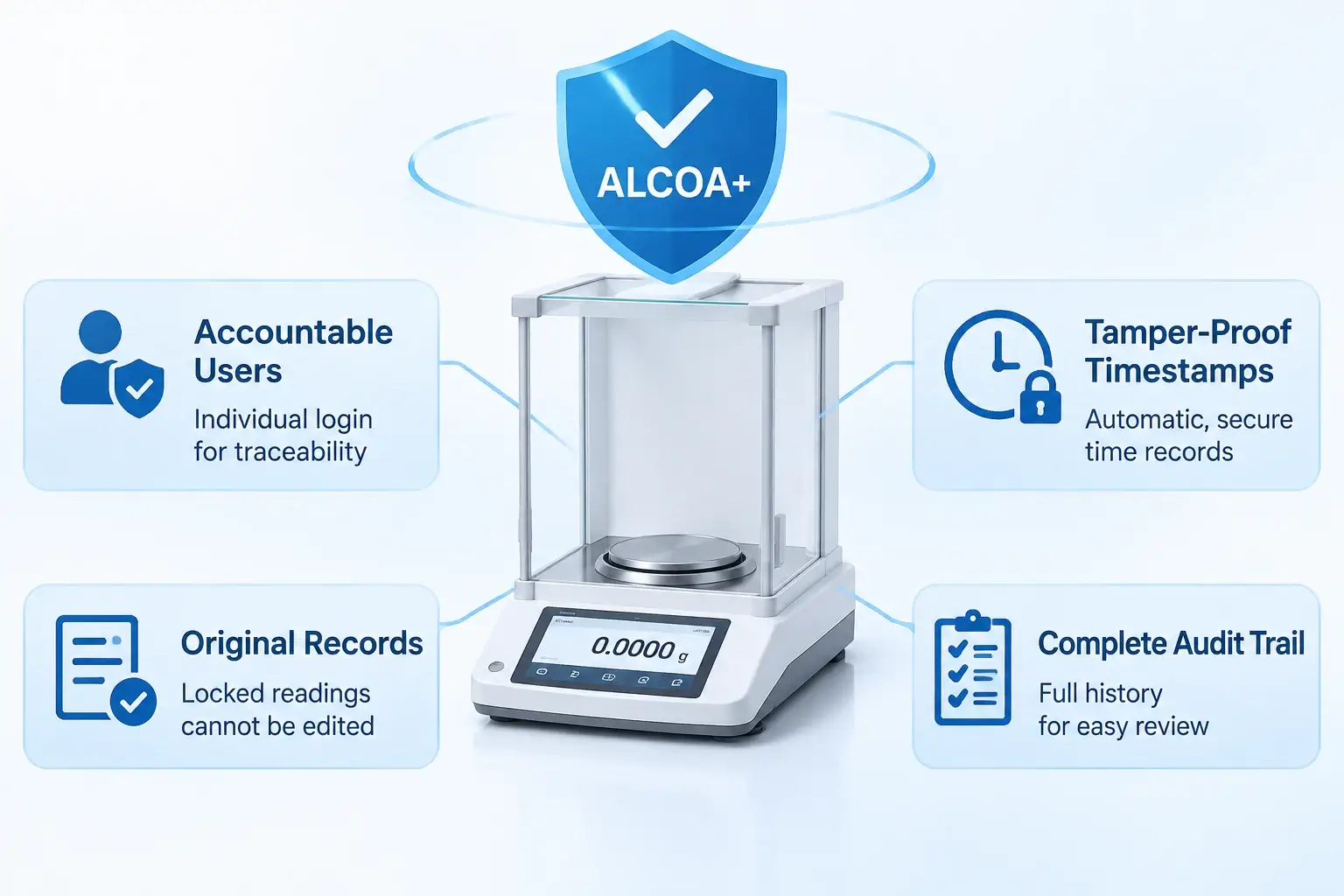
- Attributable Operations: Anonymous weighing and shared logins violate basic compliance rules. Compliant balances enforce role-based access control (RBAC), requiring individual credentials. Bench analysts can execute SOPs, while only supervisors and administrators can review data or adjust configuration parameters. Every measurement is bound to a verified user ID.
- Tamper-Proof Time Tracking: Manually back-dating or post-dating weight logs to mask missed stability windows is a frequent audit violation. Compliant balances incorporate an isolated, battery-backed hardware real-time clock (RTC). Because operators cannot alter system time, each measurement receives an immutable timestamp at the second of execution.
- Firmware-Level Original Records: Transcribing a value onto a paper worksheet or typing it into a spreadsheet introduces immediate transcription risk. A GLP balance locks the reading internally once the stability sensor settles, creating a primary source record that cannot be edited after the fact.
- A Continuous Audit Trail: From taring and sample weighing to daily calibration and error warnings, every instrument interaction is cataloged in a non-volatile audit trail, providing inspectors with an unbroken history of bench activity.
2. Replacing Error-Prone Manual Bench Practices
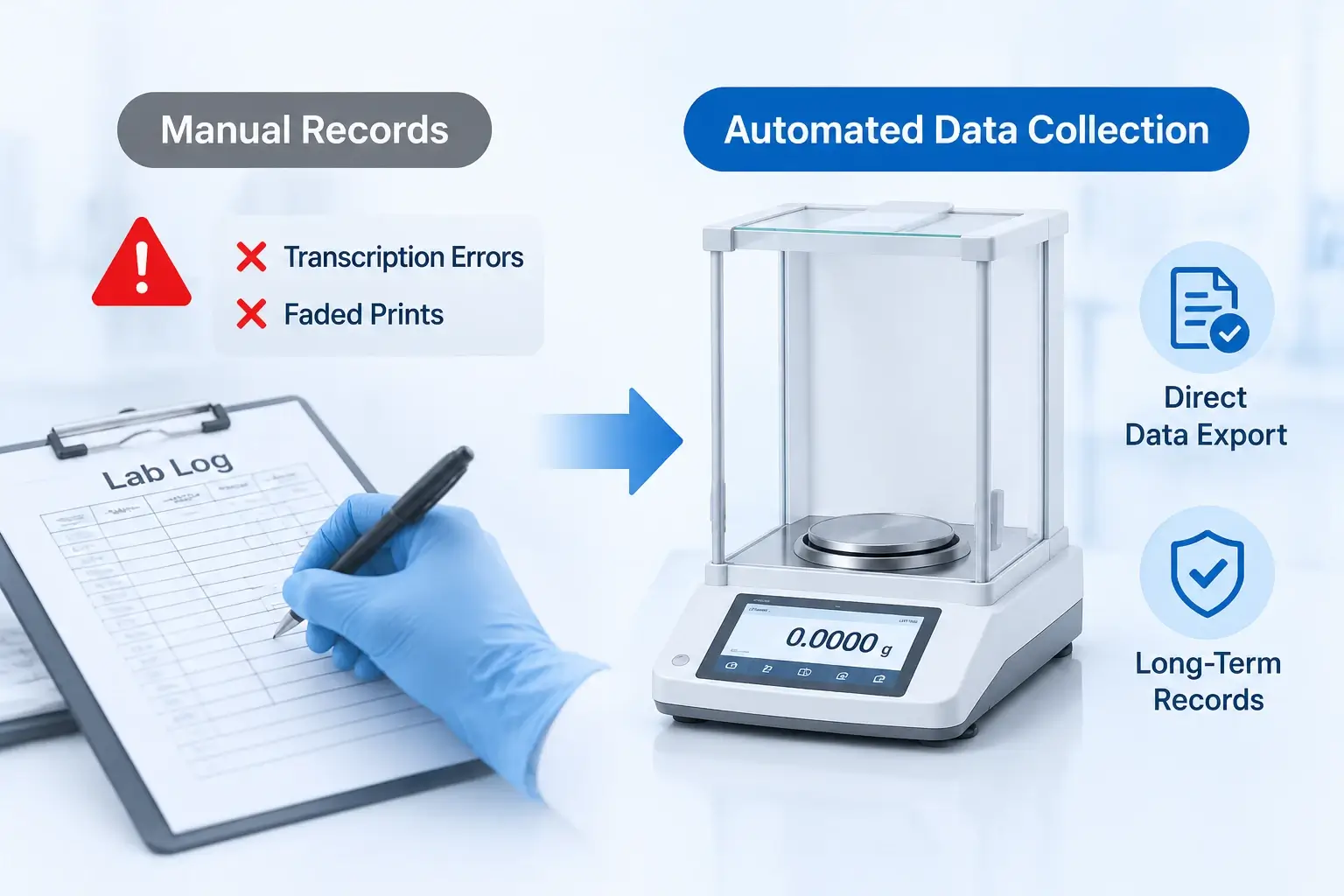
Manual documentation is the leading source of laboratory data deviations. Replacing paper logbooks with automated data collection eliminates common errors and reduces labor overhead.
- Eliminating Transcription Mistakes: High-throughput testing facilities process dozens of volumetric flasks daily. Under tight deadlines, technicians inevitably transpose numbers, misplace decimal points, or record incorrect batch numbers. Direct data export eliminates the human transcription step entirely.
- Preventing Faded Thermal Printouts: Media longevity is another hidden risk. Standard receipt printers rely on direct-thermal paper, which fades within months when exposed to light, heat, or laboratory solvent vapors. When auditors inspect records years later, faded prints represent an unrecoverable loss of raw data. GLP protocols require indelible dot-matrix ribbon prints or direct, cryptographically signed electronic records that remain legible for decades.
- Boosting Analyst Throughput: Automating these administrative tasks frees analysts from manually tracking environmental logs, hand-writing calculation sheets, and cross-checking logs, directly boosting daily sample throughput.
3. Engineering Out Environmental and Operational Variables
Analytical balances measuring down to fractions of a milligram detect micro-forces. Ambient fluctuations can easily distort measurements if the instrument lacks automated hardware safeguards.
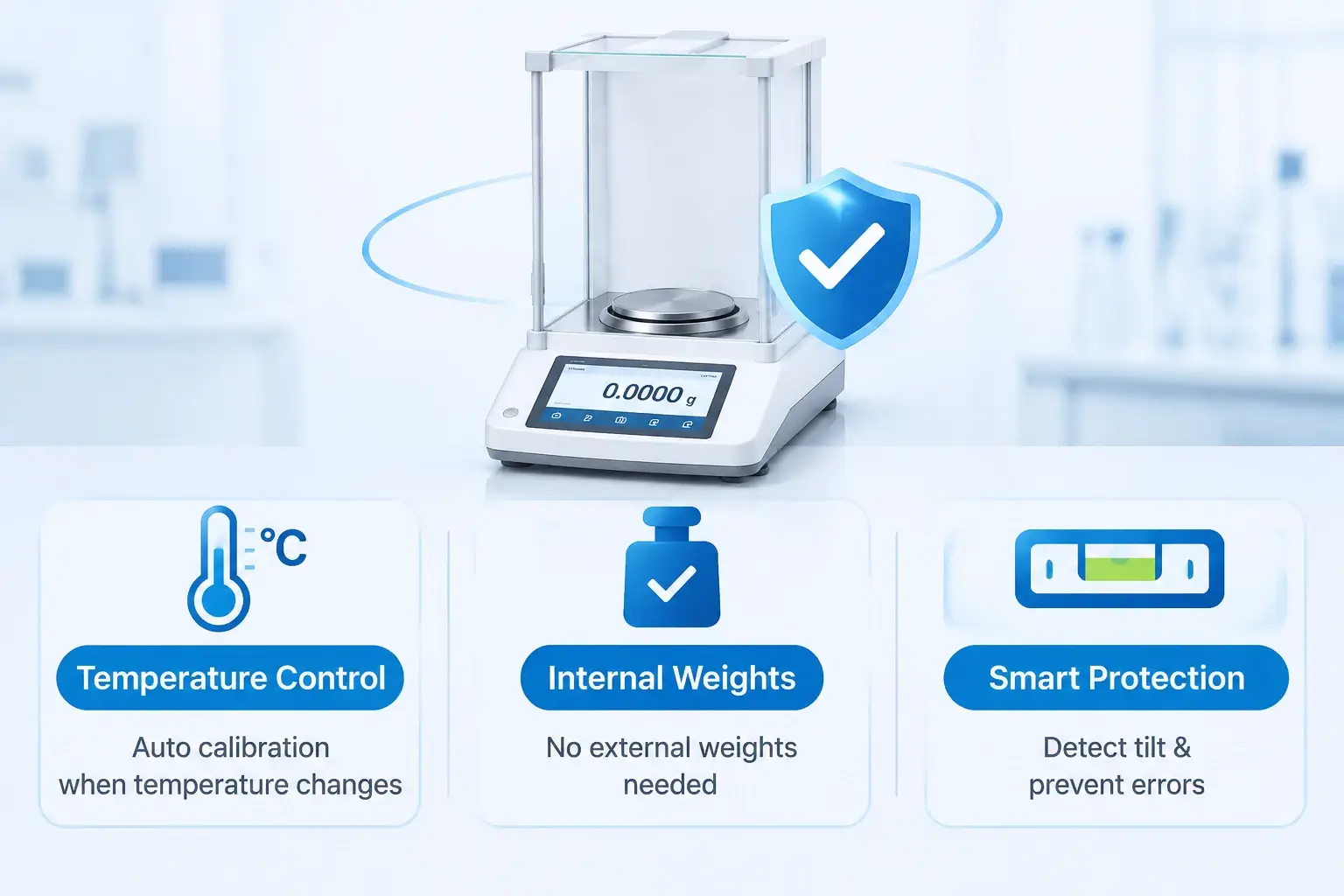
- Automated Temperature Drift Compensation: Ambient shifts caused by HVAC cycles, adjacent equipment, or diurnal patterns alter sensor baseline stability. GLP-engineered balances continuously monitor ambient temperature. When variations exceed a set limit (such as ΔT ≥ 1.5°C) or a preset time interval elapses, the balance temporarily locks the channel, executes an automated calibration using an internal reference weight, logs the event, and reopens for use.
- Eliminating External Weight Handling: Relying on technicians to manually calibrate balances using external weights introduces handling errors. Missing scheduled checks or touching weights with bare fingers transfers skin oils, permanently damaging the certified mass value. Internal motorized weights eliminate human dependency and protect reference standards from environmental contamination.
- Real-Time Physical Interlocks: An unlevel balance generates lateral force vectors that distort linear readouts. Optoelectronic tilt sensors detect bench movement immediately, alerting the user and blocking data export until the housing is leveled. Where dry air generates electrostatic surface charges on glass or plastic tare vessels, integrated de-ionizing mechanisms neutralize charges before readings are locked.
4. Native Connectivity Without Data Intermediaries
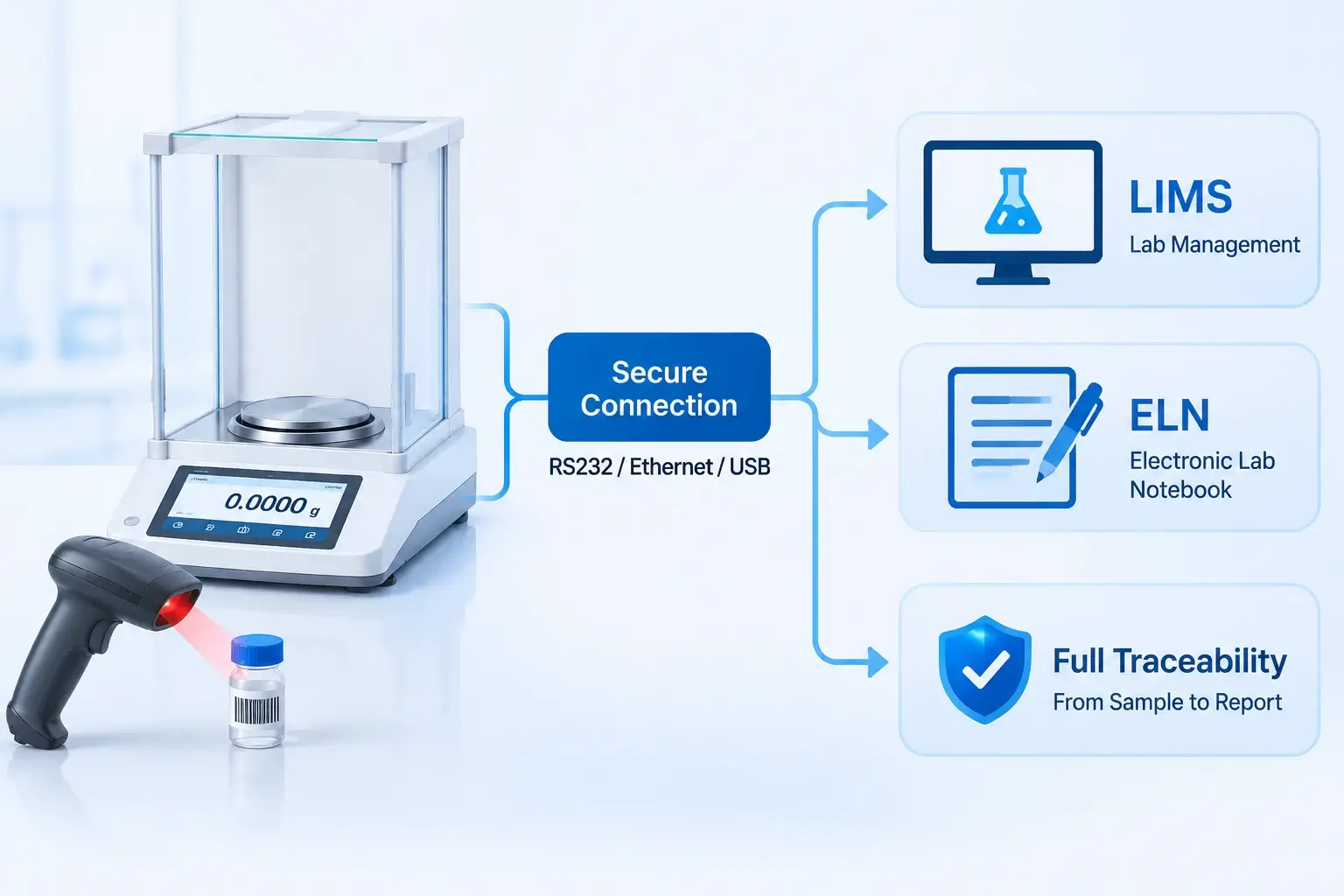
Stand-alone instruments create high-risk data silos. If a balance only exports raw, unencrypted text via an open terminal, values can easily be altered before entering a final certificate of analysis.
- Direct LIMS & ELN Integration: Compliant systems use secure communication protocols (RS232, Ethernet, or USB) to connect directly with Laboratory Information Management Systems (LIMS) and Electronic Lab Notebooks (ELN). Weighing data, operator IDs, tare values, and tare verification transmit seamlessly into digital batch records.
- End-to-End Barcode Traceability: Adding barcode and 2D matrix scanners to the workstation completes the chain of custody. Scanning sample vials, reagent containers, and analytical standards directly at the balance ensures complete end-to-end traceability from sample intake to disposal.
5. Mitigating Hidden Costs and Business Liabilities
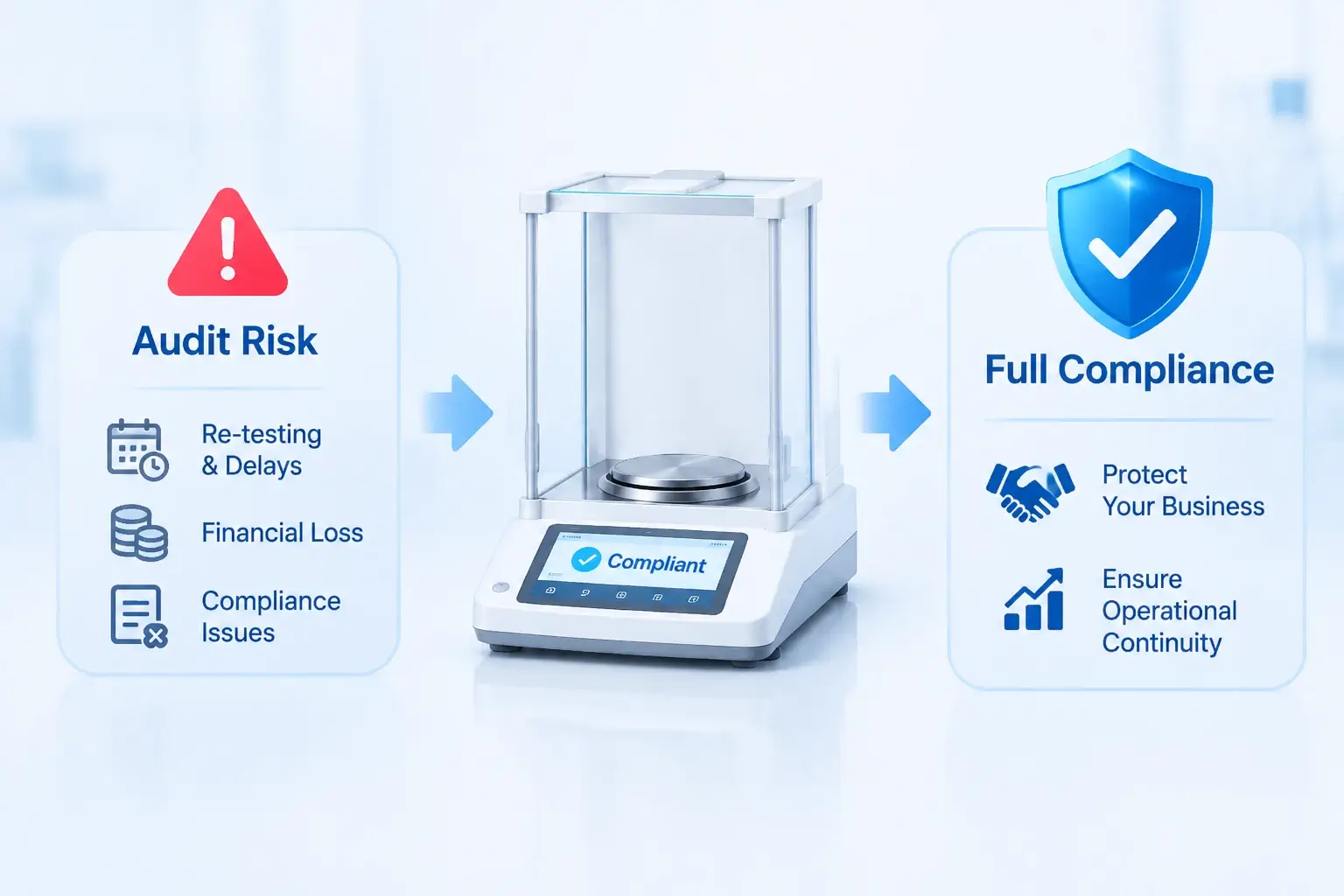
The price difference between a standard precision scale and a GLP-compliant analytical balance is negligible compared to the financial risks of an audit failure.
- Accelerating OOS Root-Cause Investigations: When an Out-of-Specification (OOS) result occurs in downstream HPLC or GC testing, laboratories must launch an extensive root-cause investigation. Without verified, time-stamped balance logs, isolating the error is difficult, often leading to weeks of re-testing, quarantined inventory, and wasted reagents. An immutable audit trail allows QA managers to confirm balance calibration and operator compliance within minutes, ruling out sample preparation immediately.
- Protecting Regulatory Filings & Accreditation: For pharmaceutical developers submitting IND/NDA filings, or contract labs (CROs/CDMOs) maintaining ISO/IEC 17025 accreditation, unverified weighing records can lead to 483 warning letters, rejected submissions, or lost client contracts. Compliant weighing systems protect both operational continuity and commercial reputation.
6. Practical Compliance: The Stuccler Approach
Achieving full regulatory compliance does not require overly complicated workflows. Modern instruments hardcode regulatory requirements directly into the machine's firmware, ensuring compliance runs quietly in the background.
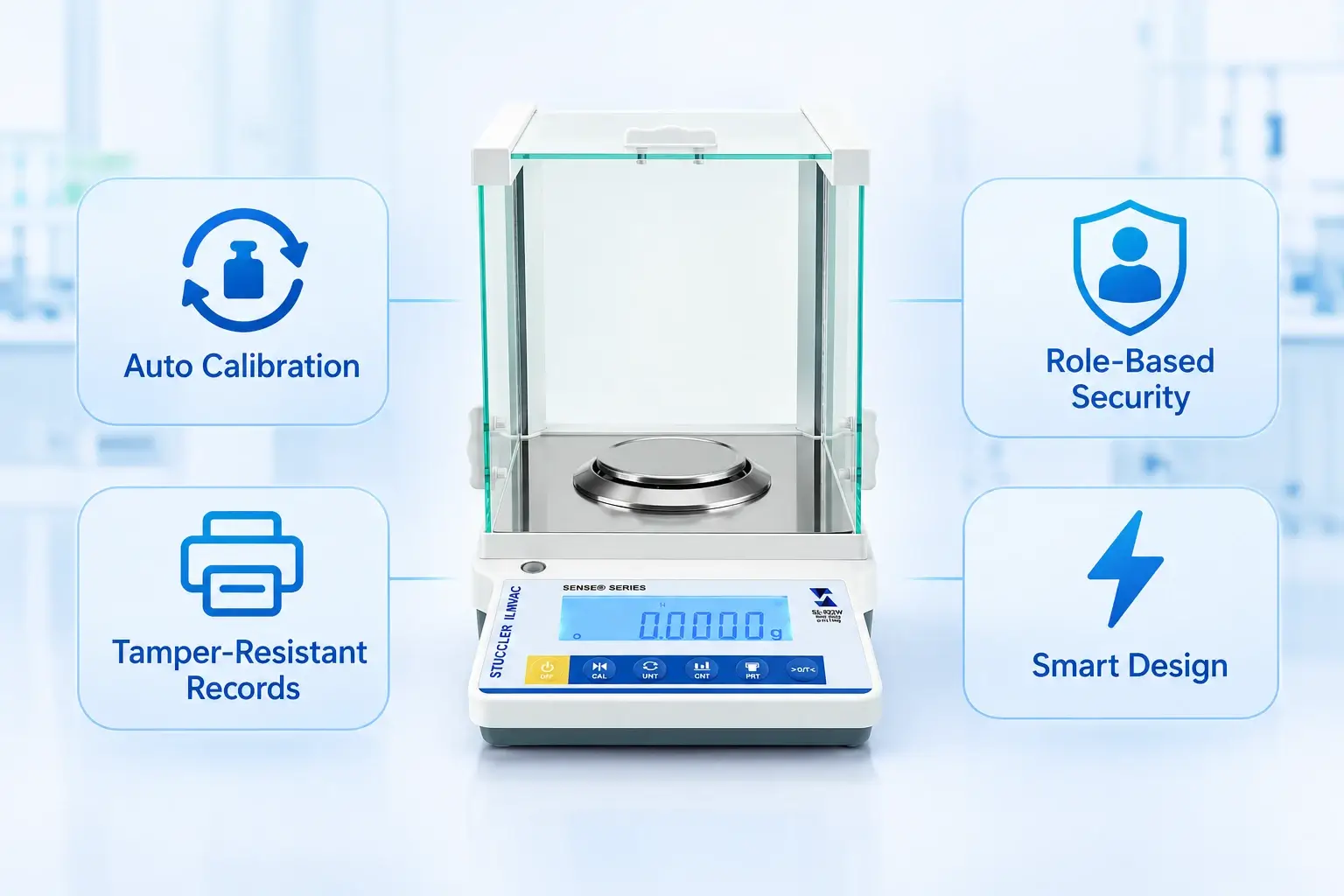
Stuccler analytical balances are engineered to bridge the gap between rigorous GLP/GMP standards and efficient daily laboratory operations:
- Internal Motorized Calibration: Automatic recalibration routines trigger automatically based on time intervals or temperature shifts, logging traceable verification records without interrupting laboratory focus.
- Native Tamper-Resistant Output: Print and electronic outputs generate structured GLP documentation automatically—incorporating instrument serial numbers, operator IDs, timestamps, sample IDs, and calibration records.
- Role-Based Security: Multi-tiered user access protects the system clock, calibration configurations, and analytical methods behind individual passwords, maintaining total audit trail integrity.
- High-Efficiency Ergonomics: Responsive electromagnetic sensors, continuous electronic level detection, and anti-static draft shields allow analysts to work quickly without compromising compliance.
View Stuccler Analytical Balance Models & Specs →
Summary: Elevating Mass Measurement to a Quality Standard
An analytical balance is more than a simple weighing pan; it is the physical foundation of your laboratory's entire data stream. While standard scales can measure mass, they cannot defend their data against regulatory scrutiny or prove freedom from operator bias.
Investing in a GLP-compliant balance ensures your facility maintains data integrity, avoids costly OOS investigations, and passes regulatory audits with complete confidence. In modern laboratory management, compliance is never an optional overhead—it is the baseline that guarantees your analytical results stand up to scrutiny.
Upgrade Your Laboratory Weighing Infrastructure
Looking to bring your analytical weighing up to current GLP/GMP compliance standards or outfitting a new testing suite? Stuccler is a professional analytical balance manufacturer and supplier. We provide testing laboratories, pharmaceutical facilities, and research institutions worldwide with reliable, regulation-ready weighing instruments.
We offer comprehensive B2B supply programs, direct factory wholesale, and private-label (OEM) manufacturing tailored to your facility's technical specifications.
Contact Stuccler & Request a Product Quote →